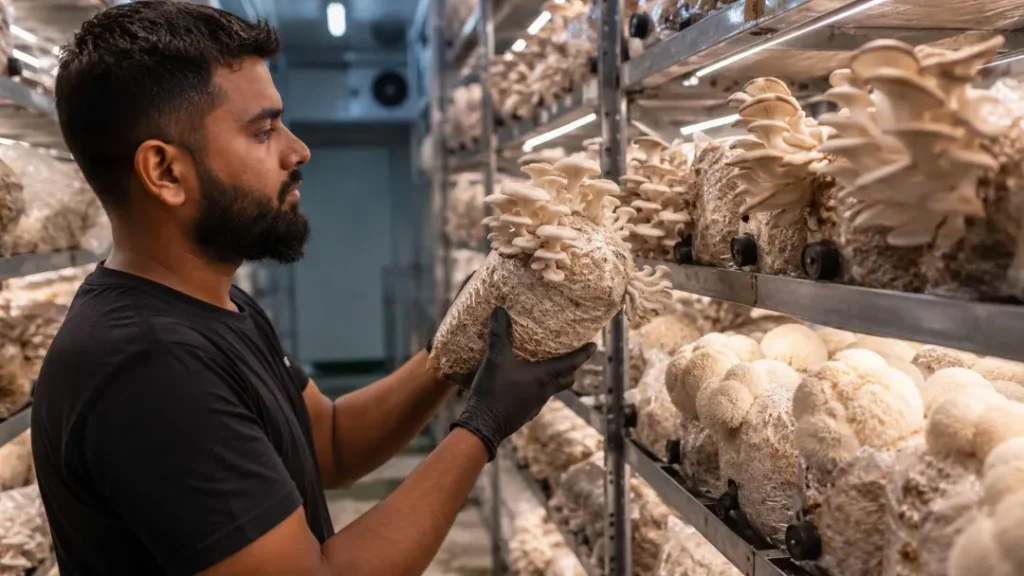
Mushroom farming profitability has become a hot topic in 2026, especially as food prices rise and consumers demand healthier, locally grown produce. From gourmet restaurants in London to organic food markets in California, mushrooms are selling fast — and often at premium prices.
The exciting part? You do not need hundreds of acres or expensive tractors to start. Many profitable mushroom farms operate from garages, sheds, shipping containers, or small indoor rooms. Therefore, even beginners can enter the market with modest investment.
Believe it or not, many successful growers started with nothing more than a shaded corner and a few grow bags. If that sounds like your style, this guide on setting up a small mushroom farm in your backyard is the perfect place to begin.
However, not every mushroom business succeeds. Poor humidity control, contamination, and weak marketing can quickly turn a promising setup into an expensive science experiment.
This guide breaks down the real numbers, startup costs, profit margins, and business strategies behind profitable mushroom farming. You will learn what works, what fails, and whether mushroom farming is truly worth your time and money.
What Is Mushroom Farming?
Mushroom farming is the controlled cultivation of edible fungi for commercial or personal use. Unlike traditional crops, mushrooms grow indoors and require little land.
Farmers grow mushrooms using substrates such as:
- Straw
- Sawdust
- Coffee grounds
- Agricultural waste
- Compost blends
Moreover, mushrooms grow quickly. Some oyster mushroom varieties can be harvested within 3–4 weeks.
That speed makes mushroom farming attractive for small-scale entrepreneurs.
Types of Mushrooms With High Market Demand
Not all mushrooms offer the same profits. Some sell for supermarket prices, while others command gourmet-level margins.
| Mushroom Type | Average Retail Price | Popular Markets |
|---|---|---|
| Oyster Mushrooms | $8–$15/lb | Restaurants, farmers’ markets |
| Shiitake Mushrooms | $12–$20/lb | Asian cuisine, health stores |
| Lion’s Mane | $15–$25/lb | Wellness market, supplements |
| Button Mushrooms | $3–$6/lb | Supermarkets |
| Enoki Mushrooms | $10–$18/lb | Asian grocery chains |
Lion’s Mane has grown rapidly in popularity because consumers associate it with brain health and wellness.
Meanwhile, oyster mushrooms remain beginner-friendly and highly productive.
Indoor vs Outdoor Mushroom Farming
Indoor Farming
This farming systems dominate commercial production because growers control:
- Humidity
- Temperature
- Airflow
- Light exposure
- Contamination risk
Advantages include:
- Year-round production
- Higher yields
- Faster growth cycles
- Better quality consistency
However, startup costs are higher.
Outdoor Farming
Outdoor cultivation typically uses logs or shaded environments.
Benefits include:
- Lower startup cost
- Natural growing environment
- Reduced electricity bills
Still, outdoor systems depend heavily on climate conditions.
For most Western markets, indoor growing offers better long-term mushroom farming profitability.
Is Mushroom Farming Profitable in 2026?
Yes — mushroom farming can be highly profitable when managed correctly.
The global mushroom market continues to expand due to:
- Plant-based diets
- Organic food demand
- Functional foods
- Gourmet cooking trends
According to industry reports, the global mushroom industry is expected to exceed $80 billion within the next few years.
That growth creates opportunities for small and medium-sized growers.
The real opportunity lies in turning a simple growing setup into a sustainable income stream. That is why our detailed guide on How to Start a Profitable Mushroom Farming Business in 2025 has become popular among beginner growers.
Average Profit Margin
Profit margins vary depending on scale and mushroom type.
| Farm Type | Estimated Profit Margin |
|---|---|
| Small indoor farm | 30%–45% |
| Gourmet mushroom farm | 40%–60% |
| Large commercial farm | 15%–30% |
Gourmet mushrooms usually generate better margins than commodity mushrooms.
Why?
Because restaurants and health-conscious consumers willingly pay premium prices.
Market Demand in Western Countries
Demand is particularly strong in:
- USA
- Canada
- UK
- Australia
Consumers increasingly seek:
- Organic produce
- Locally sourced foods
- Vegan protein alternatives
- Functional foods
Moreover, many supermarkets now dedicate premium shelf space to gourmet mushroom varieties.
This trend supports stronger mushroom farming profitability for specialised growers.
Why Gourmet Mushrooms Sell Fast
Gourmet mushrooms solve several consumer trends simultaneously.
They are:
- Nutritious
- Low calorie
- Sustainable
- Rich in umami flavour
- Attractive for vegan diets
Restaurants also love gourmet mushrooms because they improve menu value.
For example:
A restaurant may buy oyster mushrooms wholesale at $10/lb and use them in dishes selling for $25–$40 per plate.
That pricing flexibility keeps demand strong.
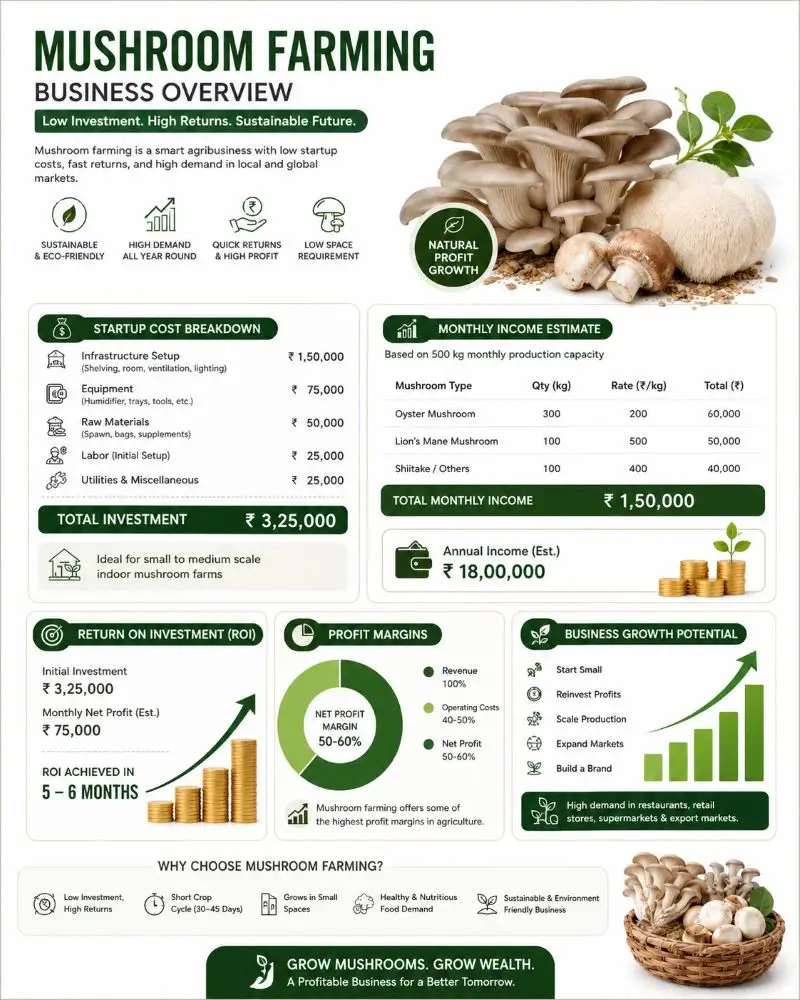
Mushroom Farming Startup Costs
Startup cost depends heavily on your scale and business model.
Some growers begin with a spare room. Others invest in climate-controlled shipping containers.
Small-Scale Setup Cost
A beginner indoor mushroom farm can start surprisingly cheaply.
| Item | Estimated Cost |
|---|---|
| Shelving racks | $150–$500 |
| Humidifier | $80–$250 |
| Grow bags | $50–$150 |
| Spores or spawn | $100–$300 |
| Ventilation system | $150–$600 |
| Thermometer/hygrometer | $25–$80 |
| LED lighting | $50–$120 |
Total Estimated Cost:
$600–$2,000
This level suits hobby growers or side-income businesses.
Before spending thousands on commercial equipment, many beginners test the waters with a compact backyard setup. Our article on How to Set Up a Small Mushroom Farm in Your Backyard explains exactly how to do that without overspending.
Commercial Farm Investment
Commercial operations require far greater investment.
| Investment Area | Estimated Cost |
|---|---|
| Climate-controlled room | $5,000–$20,000 |
| Sterilisation equipment | $2,000–$10,000 |
| Refrigeration | $2,000–$8,000 |
| Packaging equipment | $1,000–$5,000 |
| Labour | Variable |
| Utilities | Ongoing |
Total Commercial Cost:
$15,000–$100,000+
However, commercial farms can generate significant recurring revenue.
Equipment Needed
The right equipment directly impacts yield quality and profitability.
Essential mushroom farming equipment:
- Humidifiers
- HEPA filtration
- Ventilation fans
- Pressure cookers/autoclaves
- Growing racks
- LED grow lights
- Hygrometers
- Storage refrigeration
Cheap equipment often leads to contamination.
Unfortunately, contamination is the silent killer of mushroom farms.
How Much Can a Mushroom Farm Make?
Now for the question everyone secretly came for.
How much money can you realistically earn?
The answer depends on:
- Production size
- Mushroom type
- Sales channels
- Operational efficiency
Income Per Square Foot
Indoor mushroom farming uses space efficiently.
| Space Size | Monthly Yield | Estimated Revenue |
|---|---|---|
| 100 sq ft | 150–250 lbs | $1,500–$3,500 |
| 500 sq ft | 800–1,200 lbs | $8,000–$18,000 |
| 1,000 sq ft | 1,500–3,000 lbs | $15,000–$40,000 |
Lion’s Mane and shiitake often generate higher revenue than oyster mushrooms.
Monthly Revenue Examples
Example 1: Small Side Business
- 200 lbs oyster mushrooms/month
- Wholesale price: $9/lb
Monthly Revenue: $1,800
Estimated profit after expenses:
$700–$1,000/month
Example 2: Gourmet Urban Farm
- 800 lbs mixed mushrooms/month
- Average selling price: $14/lb
Monthly Revenue: $11,200
Estimated net profit:
$4,000–$6,000/month
ROI Breakdown
Many small farms recover startup costs within 6–18 months.
| Investment | Monthly Profit | Estimated Payback |
|---|---|---|
| $2,000 | $500 | 4–6 months |
| $10,000 | $2,500 | 6–12 months |
| $50,000 | $8,000 | 12–18 months |
Therefore, mushroom farming profitability can be impressive when operations remain efficient.
Best Mushrooms for Profit
Some mushrooms simply make more money than others.
Choosing the right variety matters enormously.
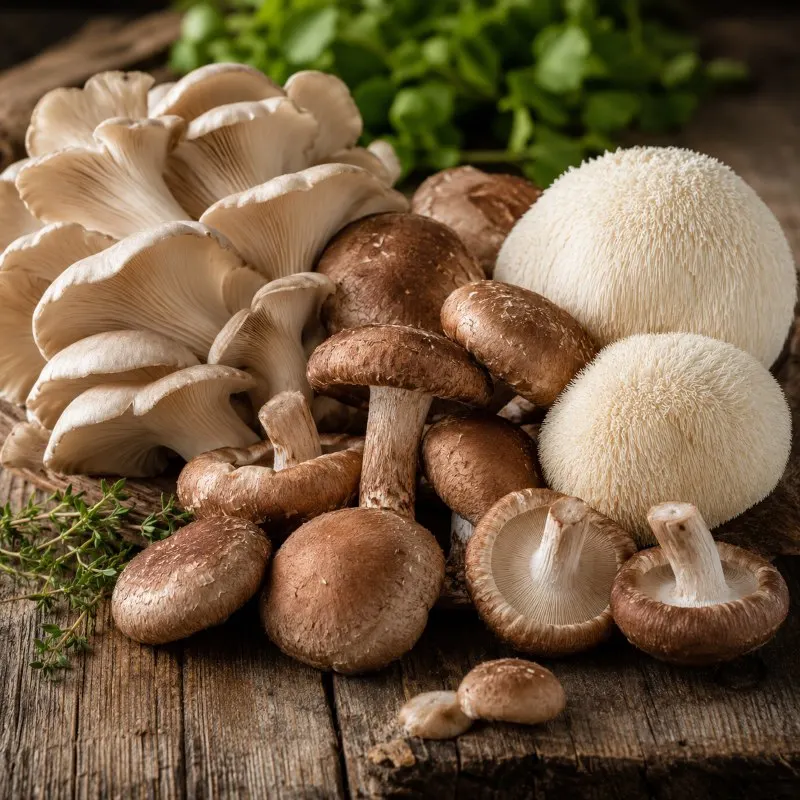
Oyster Mushrooms
Oyster mushrooms are ideal for beginners.
Advantages:
- Fast growth
- High yield
- Strong market demand
- Easy cultivation
Average selling price:
$8–$15/lb
Shiitake Mushrooms
Shiitake mushrooms enjoy strong international demand.
They offer:
- Excellent shelf life
- Premium pricing
- High restaurant demand
However, they require more patience and stricter growing conditions.
Average selling price:
$12–$20/lb
Lion’s Mane Mushrooms
Lion’s Mane may be the superstar of profitable mushroom farming.
Consumers buy Lion’s Mane for:
- Brain health
- Cognitive support
- Supplement production
- Functional food products
Average selling price:
$15–$25/lb
Some supplement companies pay even higher prices for dried products.
Common Challenges in Mushroom Farming
Mushroom farming sounds glamorous until mould invades your grow room like an uninvited relative at Christmas dinner.
Every grower faces challenges.
Humidity Control
Mushrooms require high humidity.
Too little humidity causes:
- Cracked caps
- Poor growth
- Lower yields
Too much humidity increases contamination risk.
Therefore, consistent monitoring is critical.
Contamination Problems
Contamination destroys profits quickly.
Common contaminants include:
- Green mould
- Bacteria
- Competing fungi
Professional hygiene practices are essential.
Successful growers sterilise equipment carefully and maintain clean growing conditions.
Market Competition
Competition continues increasing in urban markets.
To stand out:
- Focus on gourmet varieties
- Build restaurant relationships
- Offer organic certification
- Create branded packaging
Direct sales usually produce better profits than wholesale channels.
Tips to Increase Mushroom Farm Profit
Smart strategy matters just as much as production skill.
Sell Direct to Restaurants
Restaurants often pay premium prices for fresh local mushrooms.
Benefits include:
- Better margins
- Repeat customers
- Stable demand
- Brand credibility
Chefs especially value reliable weekly supply.
Use Grow Kits
Grow kits create extra revenue streams.
You can sell:
- DIY mushroom kits
- Home growing boxes
- Educational kits
These products often generate excellent margins online.
Moreover, grow kits expand your business beyond fresh produce.
Start With Small Indoor Systems
Many beginners fail because they scale too quickly.
Instead:
- Start small
- Learn contamination control
- Build local customers
- Reinvest profits gradually
A modest indoor setup often outperforms an oversized, poorly managed facility.
Many growers fail because they scale too quickly. Instead, learn the business side properly first with our complete guide to building a profitable mushroom farming business step by step.
Is It Worth It?
For many entrepreneurs, yes.
Mushroom farming offers:
- Low land requirements
- Fast crop cycles
- High-value products
- Year-round income potential
However, success requires discipline and consistency.
This is not passive income.
You must:
- Monitor humidity
- Maintain cleanliness
- Build customer relationships
- Manage logistics carefully
Still, compared to many agricultural businesses, mushroom farming profitability remains highly attractive.
Especially for:
- Urban farmers
- Side-hustle entrepreneurs
- Sustainable agriculture enthusiasts
- Small-scale food producers
If approached professionally, mushroom farming can become a reliable income source with scalable long-term potential.
FAQ Section
How profitable is mushroom farming for beginners?
Small beginner farms can earn $500–$2,000 monthly profit after gaining experience and securing customers.
Which mushroom is most profitable to grow?
Lion’s Mane and shiitake mushrooms often produce the highest profit margins due to premium market demand.
Can mushroom farming be done at home?
Yes. Many successful growers start from garages, basements, or spare rooms using indoor growing systems.
How long does it take to grow mushrooms commercially?
Oyster mushrooms can grow within 3–4 weeks. Shiitake mushrooms usually take longer.
Is mushroom farming risky?
Like any business, risks exist. However, contamination control and strong customer relationships reduce failure risk significantly.
Final Thoughts
Mushroom farming profitability continues attracting entrepreneurs across the USA, UK, Canada, and Australia — and for good reason.
The industry combines:
- High consumer demand
- Sustainable food production
- Strong profit potential
- Flexible startup options
Better still, mushroom farming does not require massive farmland or million-pound investments.
Start small.
Learn the process properly.
Focus on quality over quantity.
Then scale carefully.
With the right strategy, mushroom farming can grow from a modest side hustle into a thriving agricultural business.
And frankly, there are worse ways to earn money than growing gourmet fungi indoors while pretending you are a slightly underfunded scientist.