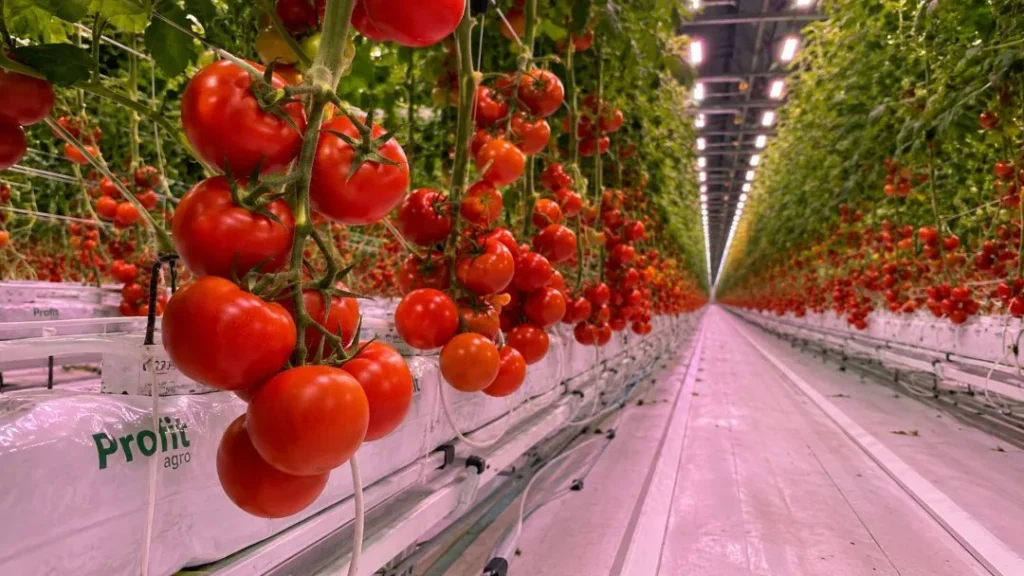
Hydroponic Tomatoes: Are They Better Than Soil Farming?
If you’ve searched for smarter ways to grow food indoors, you’ve probably come across hydroponic tomatoes. They look cleaner, grow faster, and often produce bigger harvests than traditional tomatoes. However, are they actually worth the higher setup cost?
That’s the million-dollar gardening question.
With food prices rising and indoor farming booming across the USA, UK, Canada, and Australia, hydroponic growing has shifted from a niche hobby into a serious business opportunity. In fact, many small growers now earn consistent income from greenhouse tomatoes year-round.
This guide compares hydroponic and soil-grown tomatoes in plain English. We’ll cover yields, startup costs, profits, sustainability, and whether hydroponics makes financial sense for beginners.
What Is Hydroponic Tomatoes Farming?
Hydroponic tomato farming is a method of growing tomatoes without soil. Instead, plants grow in nutrient-rich water supported by materials such as coco coir, perlite, or rockwool.
The roots absorb nutrients directly, which helps plants grow faster and healthier.
How Hydroponic Systems Work
A hydroponic setup delivers water, oxygen, and nutrients straight to plant roots. Because the plants do not waste energy searching for nutrients in soil, growth becomes more efficient.
Popular hydroponic systems include:
- Deep Water Culture (DWC)
- Nutrient Film Technique (NFT)
- Drip irrigation systems
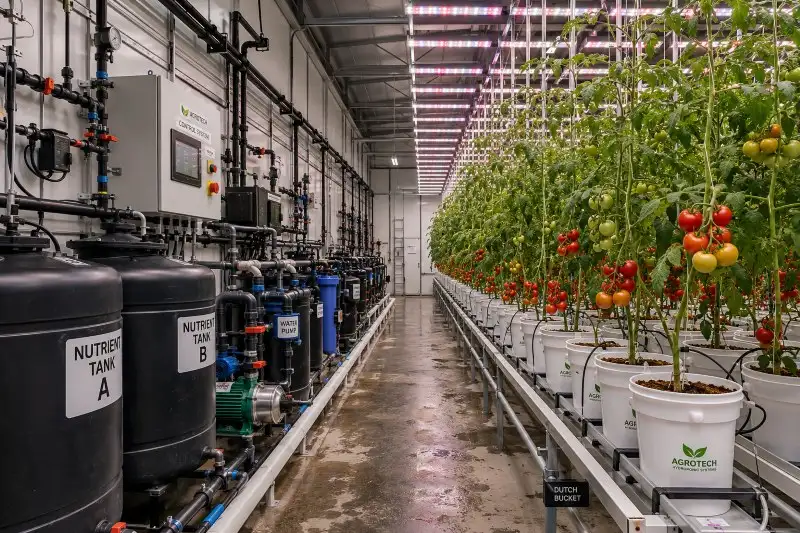
- Dutch bucket systems
For tomatoes, Dutch bucket systems remain one of the most popular choices because they support larger plants and heavy fruit production.
Common Equipment Needed
| Equipment | Estimated Cost (USD) |
|---|---|
| Grow lights | $100–$600 |
| Water pump | $25–$80 |
| Nutrient solution | $30–$100/month |
| Grow tent or greenhouse | $300–$2,500 |
| Climate control | $100–$800 |
| pH and EC meters | $40–$150 |
Commercial growers often invest much more. However, small home systems can start under $500.
Why Indoor Farming Is Growing
Indoor agriculture is expanding rapidly because growers want:
- Year-round production
- Better pest control
- Reduced water use
- Higher yields per square metre
- Stable food supply chains
Moreover, climate uncertainty has pushed many farmers to explore controlled-environment agriculture.
According to recent industry estimates, the global hydroponics market could exceed $17 billion by 2027.
Traditional Soil-Grown Tomato Farming
Soil-grown tomatoes remain the classic option. Many gardeners still prefer the flavour and simplicity of outdoor cultivation.
However, soil farming comes with challenges that hydroponics avoids.
Advantages of Soil Farming
Soil farming offers several benefits:
- Lower startup cost
- Natural nutrient ecosystem
- Easier for beginners
- No electricity dependence
- Rich microbial activity
Outdoor tomatoes also benefit from sunlight, which reduces energy expenses.
For hobby growers, soil farming remains the simplest route.
Growers interested in scaling production outdoors should also learn about commercial tomato farming in Canada, especially if they want to understand climate-specific growing techniques and market demand.
Common Challenges
Unfortunately, traditional farming also faces limitations.
Weather Problems
Heavy rain, drought, and temperature swings can damage crops quickly.
Soil Diseases
Tomatoes are vulnerable to:
- Fusarium wilt
- Root rot
- Blight
- Nematodes
These diseases can remain in soil for years.
Lower Yield Efficiency
Outdoor farms require more space and water to produce the same amount of tomatoes as hydroponic systems.
Yield Comparison
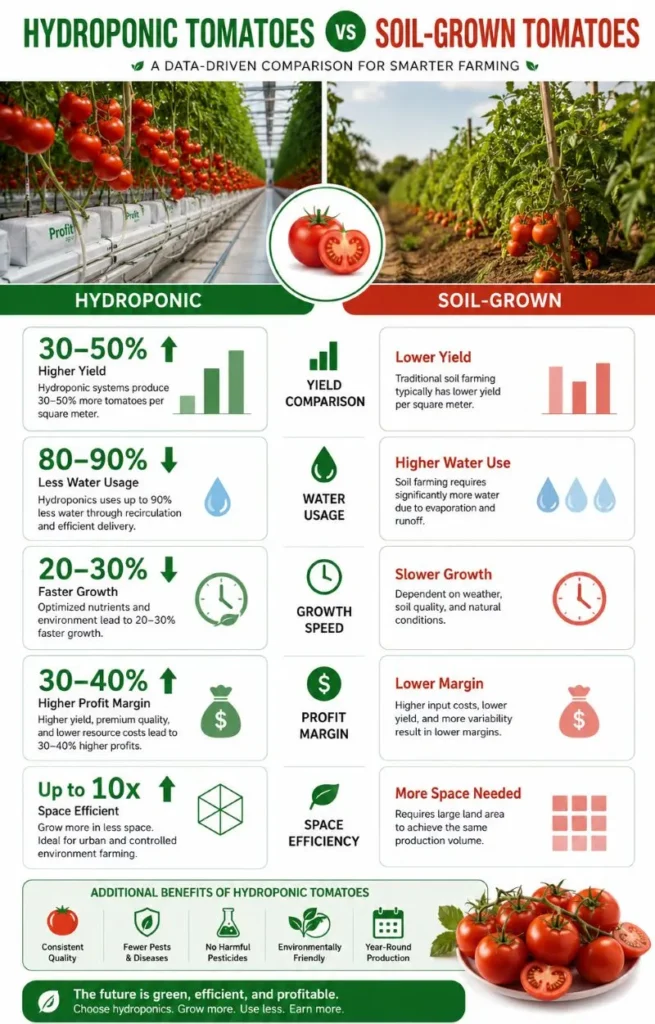
Yield is where hydroponic farming becomes very interesting.
Hydroponic Tomatoes Productivity
Hydroponic tomato systems can produce extremely high yields because growers control:
- Nutrients
- Light exposure
- Temperature
- Humidity
- Pollination
Commercial greenhouse growers often harvest 20–40 kg of tomatoes per plant annually.
Some advanced systems achieve even higher production.
Why Yields Increase
Hydroponic plants:
- Grow faster
- Experience less stress
- Receive constant nutrients
- Avoid soil diseases
As a result, fruit production becomes more predictable.
Soil-Grown Tomato Yield
Traditional outdoor tomato plants typically produce:
- 4–10 kg per plant annually
The exact yield depends on:
- Weather
- Soil fertility
- Pest pressure
- Variety selection
While some skilled growers achieve excellent harvests, outdoor farming remains less consistent.
Cost Comparison
This section matters most if you want to make money.
Startup Investment
Hydroponics requires higher upfront spending.
Small Hydroponic Setup
| Item | Cost Range |
|---|---|
| Basic indoor system | $300–$1,000 |
| LED grow lights | $150–$600 |
| Ventilation | $80–$300 |
| Nutrients | $30–$100 monthly |
Soil Gardening Setup
| Item | Cost Range |
|---|---|
| Soil and compost | $50–$150 |
| Raised beds | $100–$400 |
| Irrigation | $50–$200 |
Clearly, soil farming wins on startup affordability.
However, hydroponics often catches up through higher productivity.
Operating Costs
Hydroponic systems have recurring costs:
- Electricity
- Nutrients
- Water pumps
- Climate control
Monthly operating expenses for a small indoor setup usually range between $50–$250.
By contrast, soil gardens rely more heavily on natural sunlight and rainwater.
Energy and Water Use
Hydroponics uses electricity but saves significant water.
Studies suggest hydroponic systems can use up to 90% less water than traditional agriculture.
That’s a huge advantage in drought-prone regions such as California and Australia.
Which Method Makes More Profit?
Now we reach the real question.
Can hydroponic tomatoes actually make money?
Market Price Comparison
Hydroponic tomatoes often sell at premium prices because consumers associate them with:
- Clean growing methods
- Pesticide reduction
- Local production
- Consistent quality
Average retail pricing:
| Tomato Type | Average Retail Price |
|---|---|
| Soil-grown tomatoes | $2–$4 per kg |
| Hydroponic tomatoes | $4–$8 per kg |
Organic hydroponic tomatoes can sell for even more in premium markets.
Many commercial growers now combine hydroponics with greenhouse systems because greenhouse tomato farming profitable models can generate year-round income with stable production.
Long-Term Profitability
A small hydroponic greenhouse can become profitable within 1–3 years depending on scale.
Example ROI Scenario
Small Commercial Hydroponic Setup
| Expense | Estimated Cost |
|---|---|
| Greenhouse | $8,000 |
| Hydroponic equipment | $5,000 |
| Lighting and ventilation | $3,000 |
| Total setup | $16,000 |
Annual Revenue Estimate
| Production | Value |
|---|---|
| 5,000 kg tomatoes/year | |
| Average selling price | $5/kg |
| Gross revenue | $25,000 |
After operating costs, annual profit could range between $8,000–$14,000.
That explains why many urban farmers now explore hydroponics seriously.
Is It Worth It?
For many growers, yes — especially if space is limited.
Hydroponic tomatoes offer:
- Faster growth
- Higher yields
- Year-round harvesting
- Better water efficiency
- Potentially higher profits
However, the system requires:
- Technical knowledge
- Monitoring
- Electricity
- Initial investment
If you enjoy technology and controlled growing environments, hydroponics can be rewarding financially and personally.
On the other hand, traditional soil farming still suits gardeners who prefer simplicity and lower costs.
Interestingly, tomatoes regularly appear on lists of the most profitable crops to grow in Canada due to strong consumer demand and premium greenhouse pricing.
Environmental Impact Comparison
Sustainability has become a major buying factor for consumers.
Water Efficiency
Hydroponic systems recycle water continuously. Therefore, they waste far less water than soil farming.
This matters enormously in areas experiencing water shortages.
Sustainability Benefits
Hydroponic farming can reduce:
- Pesticide use
- Fertiliser runoff
- Land use pressure
- Soil degradation
Moreover, urban hydroponic farms reduce transportation emissions by growing food closer to cities.
However, electricity usage remains the biggest environmental drawback.
Using solar energy can improve sustainability significantly.
Best Choice for Beginners
Choosing between hydroponic and soil farming depends on your goals.
Choose Hydroponics If You Want:
- Faster growth
- Indoor farming
- Higher productivity
- Year-round harvesting
- Commercial income potential
If you are just starting out, exploring the best hydroponic farming kits for beginners can help you avoid costly mistakes and simplify your first indoor growing setup.
Choose Soil Farming If You Prefer:
- Lower startup costs
- Simpler maintenance
- Outdoor gardening
- Traditional growing methods
For absolute beginners, starting with a small hydroponic kit is often the smartest compromise.
It reduces risk while teaching valuable skills.
Common Mistakes New Hydroponic Growers Make
Many beginners struggle because they overcomplicate the system.
Avoid these mistakes:
Ignoring pH Levels
Tomatoes prefer a pH range between 5.5 and 6.5.
Poor pH control blocks nutrient absorption.
Overwatering Roots
Ironically, hydroponic plants still need oxygen.
Without proper aeration, roots can suffocate.
Buying Cheap Lights
Weak lighting causes leggy plants and poor fruit production.
High-quality LED grow lights usually pay for themselves quickly.
Poor Temperature Control
Tomatoes thrive best between 20–26°C (68–79°F).
Extreme heat reduces fruit quality.
Best Hydroponics Tomatoes Varieties
Certain tomato varieties perform exceptionally well indoors.
Top choices include:
| Variety | Best For |
|---|---|
| Cherry Tomatoes | Fast production |
| Roma Tomatoes | Sauces and cooking |
| Beefsteak Tomatoes | Large fruit |
| Sungold | Sweet flavour |
| Trust Tomatoes | Commercial greenhouse production |
Cherry tomatoes often provide the easiest success for beginners.
FAQ About Hydroponic Tomatoes
Are hydroponic tomatoes healthier than soil-grown tomatoes?
Nutritionally, both can be healthy. However, hydroponic tomatoes often contain fewer pesticide residues.
How long do hydroponic tomatoes take to grow?
Most hydroponic tomatoes mature within 60–85 days depending on variety and lighting.
Can hydroponic tomatoes grow without sunlight?
Yes. LED grow lights can fully replace sunlight indoors.
Do hydroponic tomatoes taste different?
Some people notice slightly different flavours. However, modern hydroponic systems now produce excellent-tasting tomatoes.
How much electricity does hydroponic tomatoes farming use?
A small indoor setup may add $20–$100 monthly to electricity bills depending on lighting and climate control.
Conclusion
Hydroponic tomatoes are no longer futuristic experiments. They are now a practical option for hobby growers, urban farmers, and small agricultural businesses.
Yes, the startup costs are higher. However, the potential rewards are impressive:
- Higher yields
- Premium pricing
- Efficient water use
- Year-round harvesting
For growers aiming to build a profitable indoor farming business, hydroponics offers serious long-term potential.
Start small, learn the system properly, and scale gradually.
Your future tomato harvest — and possibly your future income stream — may thank you for it.