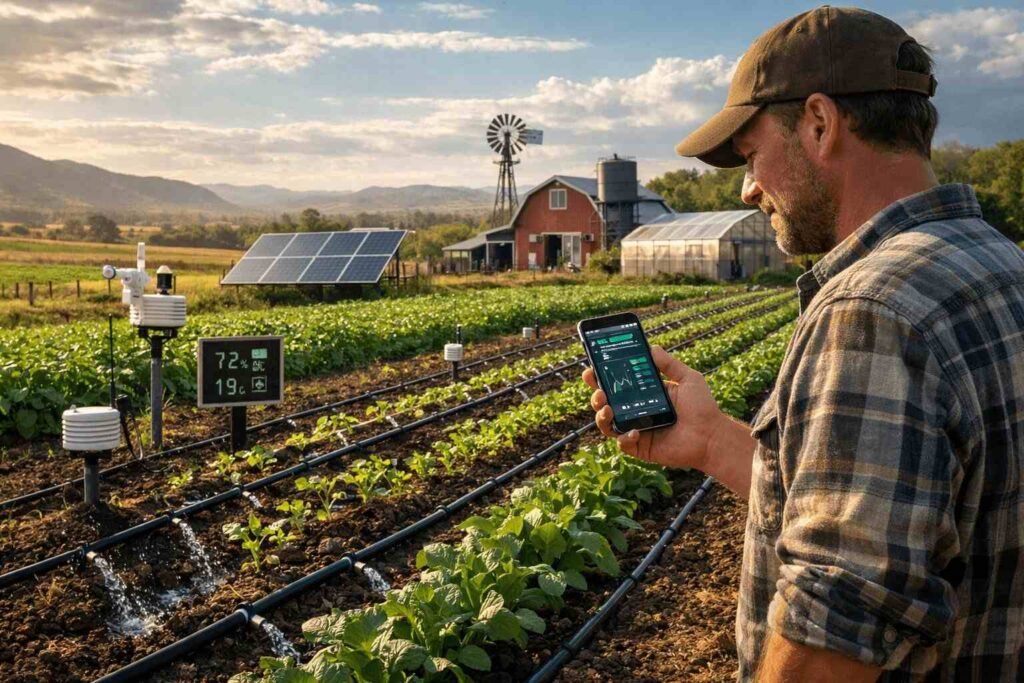
If you think smart farming is only for large, high-tech agribusinesses, think again. Today, low-cost smart farming techniques for small farms are transforming how small-scale farmers operate—without draining their wallets. From budget-friendly sensors to DIY automation, these methods help reduce labour, save water, and boost yields. Even better, many of these solutions cost less than a weekend getaway. So, whether you run a one-acre plot in the UK or a family farm in the US, this guide will show you how to farm smarter—not harder.
The Problem & Opportunity
Small farms face a familiar challenge: rising costs and limited resources. Labour is expensive, water is scarce, and margins are tight. Meanwhile, large farms use advanced technologies to maximise efficiency.
However, here’s the opportunity—smart farming is no longer exclusive.
Affordable tools, open-source technologies, and DIY innovations now allow small farmers to:
- Reduce input costs by 20–40%
- Increase yield by 15–25%
- Optimise water and fertiliser use
In short, smart farming has become accessible—and profitable.
For those focused on profitability, it’s equally important to understand the financial side of farming. This guide on small farm business profit in Canada explains real-world income potential, costs, and strategies for success in Western markets.
What is Smart Farming (in Simple Terms)?
Smart farming uses technology to improve decision-making and efficiency.
Examples include:
- Soil moisture sensors
- Automated irrigation systems
- Mobile farm management apps
- Weather-based crop planning
The good news? You don’t need thousands of dollars to start.
7 Low-Cost Smart Farming Techniques for Small Farms
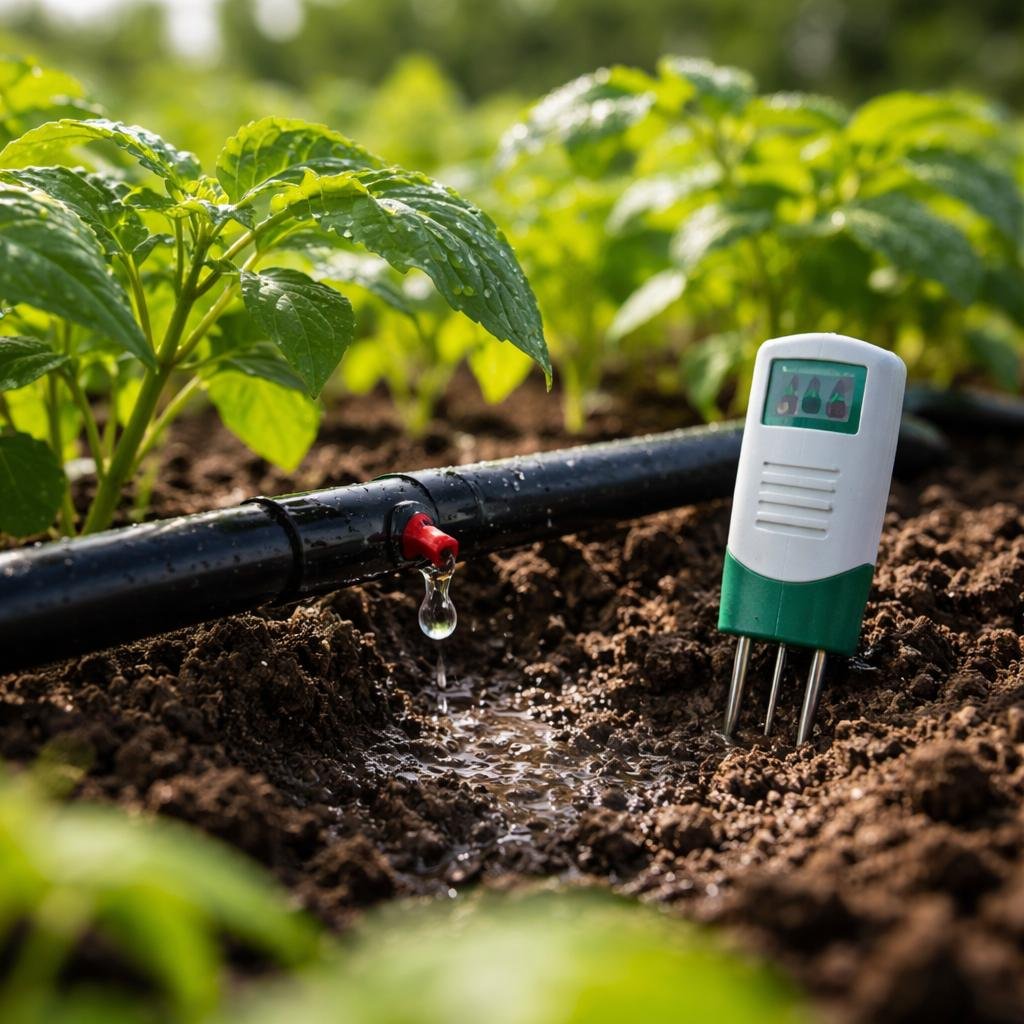
1. Smart Irrigation Systems (Budget-Friendly)
Water waste is one of the biggest hidden costs in farming.
Cost Breakdown:
- Basic drip irrigation kit: $50–$200 (£40–£160)
- Soil moisture sensor: $15–$50 (£12–£40)
Benefits:
- Saves up to 50% water
- Improves crop health
- Reduces manual labour
Pro Tip:
Use DIY Arduino-based irrigation systems to automate watering based on soil moisture.
2. Farm Management Apps
Gone are the days of notebooks and guesswork.
Cost:
- Free to $10/month (£0–£8)
Popular Features:
- Crop tracking
- Expense management
- Weather alerts
ROI Impact:
Farmers report up to 15% better decision-making efficiency.
3. Low-Cost Soil & Climate Sensors
These small devices provide big insights.
Cost:
- Soil sensor kits: $20–$100 (£16–£80)
What You Track:
- Soil moisture
- Temperature
- Humidity
Result:
Better fertiliser use = lower costs + higher yield.
However, choosing the right equipment can be overwhelming. This curated list of smart farming tools for small farmers in the USA will help you pick cost-effective solutions that actually deliver results.
4. Small Farm Automation on a Budget
Automation doesn’t mean robots worth $50,000.
Cost:
- Timer-based automation: $10–$30 (£8–£25)
Examples:
- Automatic irrigation timers
- Greenhouse ventilation systems
Benefit:
Saves 10–20 hours of labour per week.
5. Precision Farming (Affordable Version)
Precision farming sounds fancy—but it can be simple.
Low-Cost Methods:
- Use GPS-enabled smartphones
- Free mapping apps
- Manual crop zoning
Cost:
- Mostly free to $50
Benefit:
Apply fertiliser only where needed → reduces waste by 20–30%
6. Solar-Powered Farming Tools
Electricity costs can quietly eat profits.
Cost:
- Small solar kits: $100–$500 (£80–£400)
Uses:
- Water pumps
- Electric fences
- Lighting
ROI:
Break-even within 1–2 years.
7. DIY IoT Farming Systems
This is where things get exciting.
Cost:
- Arduino/Raspberry Pi setup: $30–$100 (£25–£80)
What You Can Build:
- Smart irrigation
- Weather monitoring systems
- Remote farm control
Advantage:
Custom solutions at a fraction of commercial cost.
Cost Breakdown Summary (2026 Estimate)
| Technology | Cost Range (USD) | Cost Range (GBP) |
|---|---|---|
| Smart Irrigation | $50–$200 | £40–£160 |
| Sensors | $20–$100 | £16–£80 |
| Automation Tools | $10–$50 | £8–£40 |
| Solar Systems | $100–$500 | £80–£400 |
| DIY IoT Setup | $30–$100 | £25–£80 |
Profit Potential & ROI Analysis
Let’s look at realistic numbers:
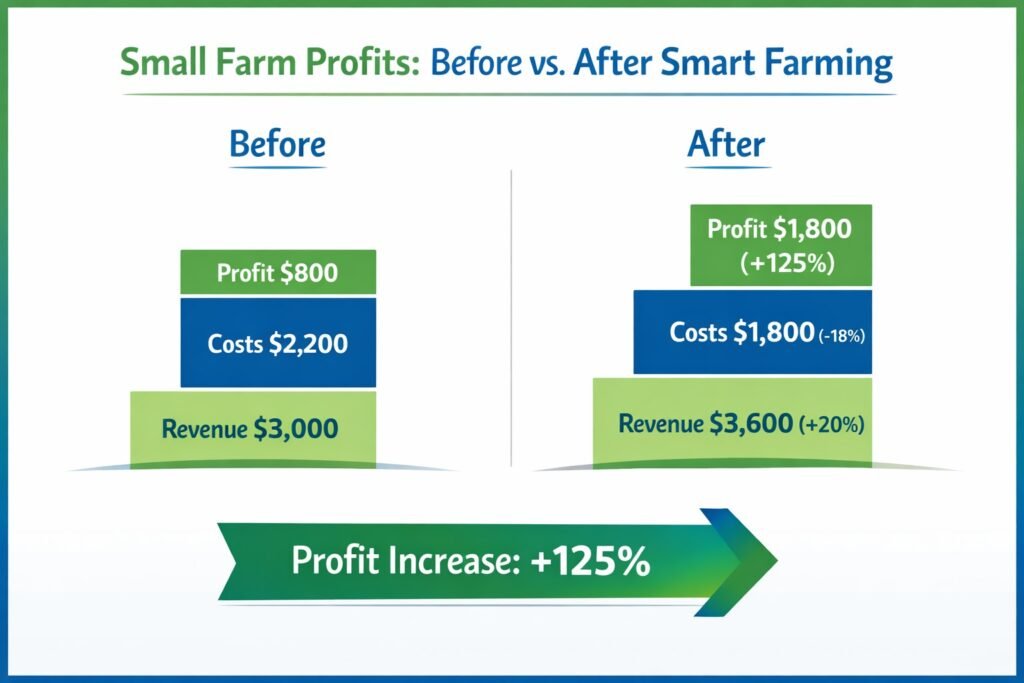
Example: 1-Acre Vegetable Farm
Before Smart Farming:
- Revenue: $3,000/year
- Costs: $2,200
- Profit: $800
After Smart Farming:
- Revenue: $3,600 (+20%)
- Costs: $1,800 (-18%)
- Profit: $1,800
Profit increase: 125%
Step-by-Step Implementation Guide
Step 1: Start Small
Begin with irrigation or sensors.
Step 2: Track Data
Use apps or spreadsheets.
Step 3: Automate Gradually
Add timers or simple IoT tools.
Step 4: Scale Smartly
Invest savings into better tech.
Challenges & Practical Solutions
❌ Challenge 1: Lack of Technical Knowledge
✔ Solution: Use YouTube tutorials and beginner kits
❌ Challenge 2: Initial Investment Fear
✔ Solution: Start under $100
❌ Challenge 3: Maintenance Issues
✔ Solution: Choose simple, durable tools
Market Opportunities in Western Countries
Demand for:
- Organic produce
- Locally grown food
- Sustainable farming
Smart farming helps small farms meet these demands efficiently.
Bonus: You can charge premium prices for “tech-enabled sustainable farming”.
Is It Worth It?
Short answer: Yes, if done smartly.
Financial Perspective:
- Initial investment: $100–$500
- ROI period: 6–18 months
- Profit increase: 50–120%
Strategic Advantage:
- Lower labour dependency
- Better crop consistency
- Higher market value
Verdict: One of the smartest investments for small farmers today.
FAQ Section
1. What are the best low-cost smart farming techniques for beginners?
Start with smart irrigation, mobile apps, and soil sensors. They are cheap and easy to use.
2. Can small farms really benefit from smart farming?
Yes. Even small farms can increase profits by up to 100% with proper implementation.
3. How much does it cost to start smart farming?
You can start with as little as $50–$100.
4. Is IoT farming expensive?
Not necessarily. DIY IoT systems can cost under $100.
5. Which smart farming tool gives the fastest ROI?
Smart irrigation systems usually provide the quickest return.
Conclusion: Farm Smarter, Not Harder
Smart farming is no longer a luxury—it’s a necessity.
With the right low-cost smart farming techniques for small farms, you can:
- Cut costs
- Boost productivity
- Increase profits
And the best part? You don’t need a massive budget—just a smart approach.
So, start small, experiment, and grow smarter every season.