Starting a farm in America is exciting, but let’s be honest, it’s not cheap. That’s where farm loans and grants USA programmes come into play. Whether you’re launching a small farm or expanding an existing one, understanding your funding options can make or break your profitability.
Farming in the USA offers strong earning potential. However, upfront costs can easily cross $50,000–$200,000 depending on your model.
The good news?
You don’t need to fund everything yourself.
There are:
- Government-backed loans
- Private agricultural lenders
- Free grant programmes
If used wisely, these can significantly reduce your financial risk and improve ROI.
Before applying for funding, it is also important to understand your financial risks. Many new farmers overlook insurance, which can protect your investment from unexpected losses. If you are unsure where to start, read this beginner-friendly guide on farm insurance in the USA.
Types of Farm Funding in the USA
Before applying, it is important to understand the two main funding categories.
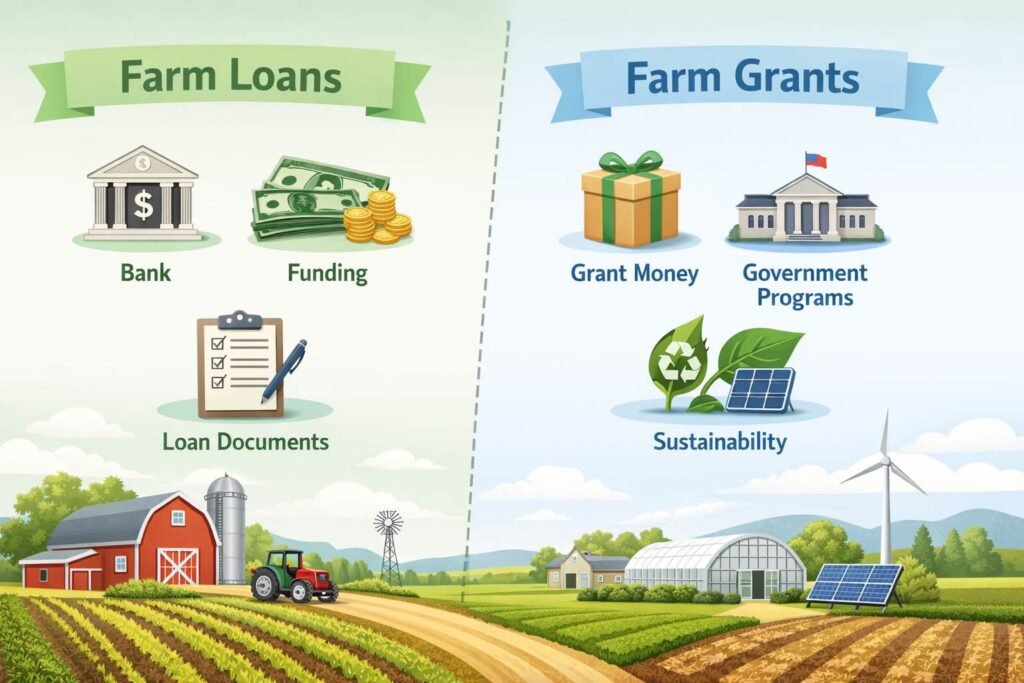
🏦 Farm Loans (Debt-Based Funding)
Farm loans are borrowed funds that must be repaid with interest over time.
Common types include:
- USDA farm loans
- Farm Service Agency (FSA) loans
- Commercial agricultural loans
Best suited for:
- Purchasing land
- Buying equipment
- Expanding farm operations
Farm Grants (Non-Repayable Funding)
Grants are funds that do not require repayment.
Key characteristics:
- Highly competitive
- Often tied to specific goals (e.g. sustainability)
Best suited for:
- Beginner farmers
- Eco-friendly projects
- Innovation in agriculture
Best Farm Loans in the USA (2026)
Understanding your loan options is essential for making a smart financial decision.
USDA Farm Loans
- Interest rate: 3.5% – 6%
- Loan amount: up to $600,000+
- Term: up to 25 years
Pros:
- Lower interest rates
- Government-backed security
- Flexible repayment terms
Cons:
- Slower approval process
- Requires detailed documentation
FSA Direct Loans
- Designed for small and beginner farmers
- Lower credit score requirements
Ideal for:
- First-time farmers
- Applicants rejected by commercial banks
Commercial Agricultural Loans
- Offered by private lenders and banks
- Faster approval process
Drawbacks:
- Higher interest rates (6%–12%)
- Stricter repayment terms
Loan Terms and Conditions Explained
This is where many farmers make costly mistakes, so pay close attention.
Interest Types
Fixed Interest Rate
- Remains the same throughout the loan
- Predictable monthly payments
Variable Interest Rate
- Changes over time
- Can increase financial risk
Loan Duration
| Loan Type | Duration |
|---|---|
| Short-term | 1–5 years |
| Medium-term | 5–10 years |
| Long-term | 15–25 years |
Long-term loans are typically used for land purchases, while short-term loans cover operational expenses.
Hidden Costs
Many borrowers overlook these additional costs:
- Processing fees: $500–$3,000
- Insurance requirements
- Legal and documentation fees
- Late payment penalties
These costs can increase your total loan expense by 5–10%.
Eligibility for Farm Loans and Grants USA
Eligibility is one of the most critical factors in securing funding.
Loan Eligibility Requirements
To qualify for most farm loans, you typically need:
- Credit score: 600–680+
- A detailed business plan
- Farming experience (1–3 years preferred)
- Collateral (for larger loans)
- Stable income or projected revenue
Important insight:
FSA loans may accept lower credit scores (around 580), making them more accessible to beginners.
Grant Eligibility Requirements
Grant programmes are more selective.
Common criteria include:
- Beginner farmer status
- Focus on sustainable or innovative farming
- Strong project proposal
- Measurable community or environmental impact
Additional advantages:
- Women farmers
- Minority farmers
- Young entrepreneurs
Step-by-Step: How to Apply for Farm Loans
A clear application process can significantly improve your chances of approval.
Step 1: Prepare a Business Plan
Your plan should include:
- Crop or production strategy
- Cost estimates
- Revenue projections
- Profit analysis
Step 2: Choose the Right Loan Type
- USDA loans for stability
- FSA loans for beginners
- Private loans for faster approval
Step 3: Gather Required Documents
- Identification documents
- Tax returns
- Financial statements
- Farm business plan
Step 4: Submit Your Application
You can apply:
- Online through official portals
- Via local USDA or FSA offices
Step 5: Wait for Approval
- Loan approval: 2–8 weeks
- Grant approval: 2–6 months
Top Government Grants for Small Farmers (2026)
Grants can significantly reduce your financial burden.
USDA Sustainable Agriculture Grants
- Funding range: $5,000 – $250,000
- Focus: environmentally friendly farming
Beginning Farmer Grants
- Supports training and startup costs
- Designed for new farmers
Conservation Innovation Grants
- Focus on climate-smart agriculture
- Higher funding potential
Organic Farming Grants: A High-Value Opportunity
If you are planning to start an organic farm, there are specialised grant programmes designed specifically for sustainable and chemical-free agriculture.
These grants often prioritise environmentally friendly practices, soil health improvement, and long-term sustainability. As a result, organic farmers may have a higher chance of approval compared to conventional applicants.
To explore eligibility, application strategies, and real funding opportunities, read this detailed guide on
government grants for organic farming in the USA
Real-Life Funding Example
Beginner Farmer Scenario
- Startup cost: $40,000
- Grant received: $12,000
- Loan taken: $20,000
- Personal investment: $8,000
Outcome
- Reduced debt burden
- Faster break-even (approximately 2.5 years)
- Improved financial stability
How Much Funding Do You Need?
A realistic cost breakdown helps you plan better.
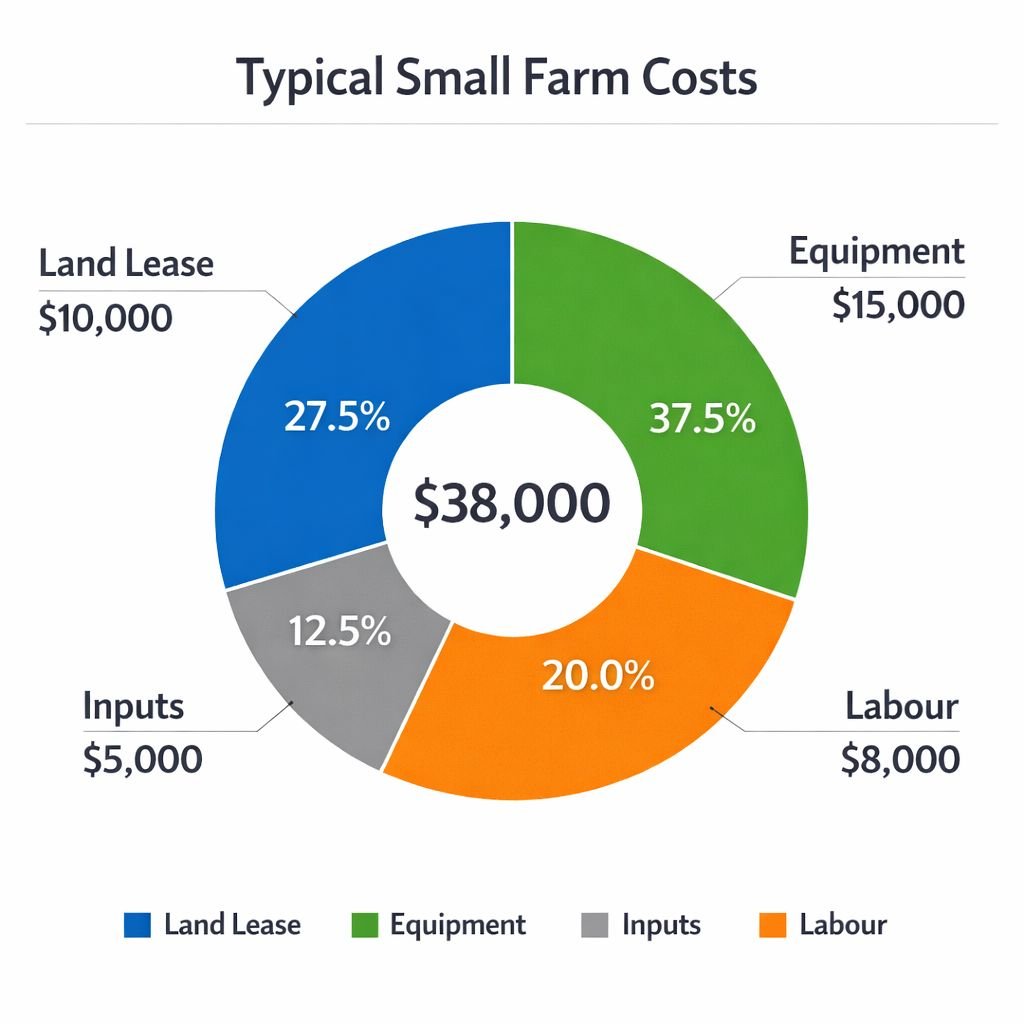
Typical Small Farm Costs
- Land lease: $10,000
- Equipment: $15,000
- Inputs: $5,000
- Labour: $8,000
Total estimated cost: $38,000
Recommended Funding Strategy
- 30% personal investment
- 40–50% loan
- 20–30% grant
This balanced approach reduces risk while maintaining growth potential.
To understand the exact startup expenses, read our detailed guide on small farm startup loan cost in the USA.
Loan vs Grant: Which One is Better?
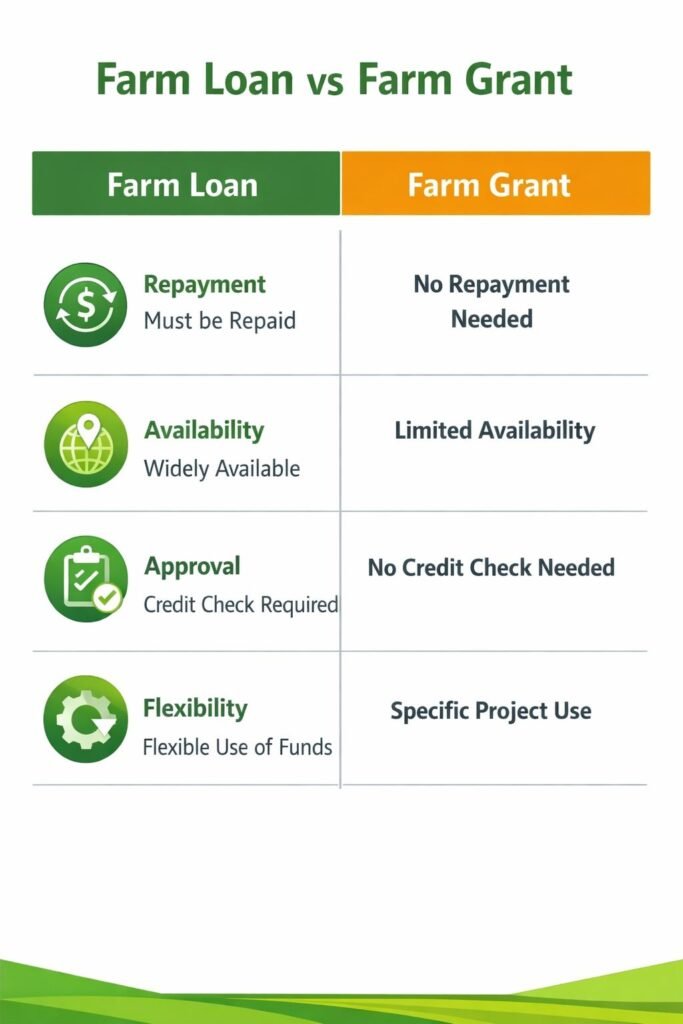
| Factor | Loan | Grant |
|---|---|---|
| Repayment | Required | Not required |
| Availability | High | Limited |
| Approval | Easier | Competitive |
| Flexibility | High | Restricted |
Best approach:
Start with grants and use loans strategically to scale.
Is It Worth It? (Financial Reality Check)
Let’s analyse a realistic scenario.
Example:
- Annual revenue: $60,000
- Operating expenses: $35,000
- Loan repayment: $12,000
Net profit: approximately $13,000
Verdict
Worth it if:
- You control costs effectively
- You choose high-profit crops
- You optimise your funding mix
Risky if:
- You rely entirely on loans
- You underestimate expenses
FAQ: Farm Loans and Grants USA
1. Can I get a farm loan with a low credit score?
Yes, especially through FSA programmes, although terms may be stricter.
2. Are farm grants truly free?
Yes, but they are highly competitive and require strong applications.
3. How much funding can I receive?
Funding can go up to $600,000 or more depending on the programme.
4. How long does approval take?
Loans typically take 2–8 weeks, while grants may take several months.
5. Can beginners apply for funding?
Yes, many programmes are specifically designed for beginner farmers.
Conclusion: Smart Funding Leads to Smart Farming
In 2026, successful farming is not just about soil quality—it is about financial planning.
Understanding farm loans and grants USA allows you to:
- Reduce financial risk
- Start faster
- Scale efficiently
Approach farming like a business, not just a lifestyle.