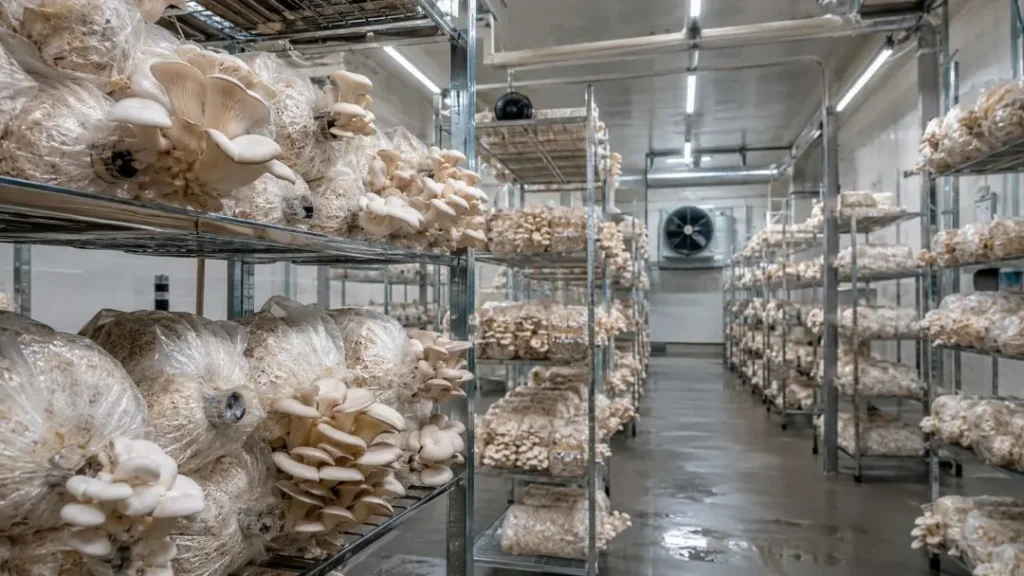
Indoor mushroom farming is quickly becoming one of the most profitable small-scale farming ideas in 2026. Why? Because mushrooms grow fast, need little space, and sell at premium prices in supermarkets, restaurants, and farmers’ markets.
Even better, you do not need acres of land or expensive machinery. A spare room, garage, or basement can become a productive mini mushroom farm. Not bad for something that looks like it belongs in a fantasy novel.
Moreover, growing mushrooms indoors gives you full control over temperature, humidity, and cleanliness. That means more reliable harvests and fewer weather-related disasters.
If you want a low-space agricultural business with decent profit potential, this guide will walk you through everything you need to know.
What Is Indoor Mushroom Farming?
Indoor mushroom farming is the process of growing edible mushrooms inside controlled environments such as rooms, garages, shipping containers, or basements.
Unlike traditional farming, mushrooms do not require sunlight or soil. Instead, they grow on organic materials called substrates. Common substrates include:
- Straw
- Sawdust
- Coffee grounds
- Coco coir
- Hardwood pellets
The indoor approach allows year-round production. Therefore, growers can produce mushrooms consistently regardless of outdoor weather conditions.
Benefits of Growing Mushrooms Indoors
Indoor cultivation offers several advantages for beginners and commercial growers alike.
1. Requires Minimal Space
A small shelving system can produce a surprising amount of mushrooms. Vertical farming techniques increase productivity further.
2. Fast Harvest Cycles
Most oyster mushrooms mature within 3–5 weeks. That means faster returns compared to vegetables or fruit crops.
3. High Market Demand
Speciality mushrooms are increasingly popular in:
- Vegan diets
- Organic cooking
- Health-conscious households
- Gourmet restaurants
4. Low Startup Costs
You can start a basic setup for under $300–$500.
5. Eco-Friendly Farming
Many growers recycle agricultural waste into mushroom substrate. It is sustainable and profitable.
Best Mushroom Types for Beginners
Not all mushrooms are beginner-friendly. Some species demand precise environmental control.
The easiest varieties include:
| Mushroom Type | Difficulty | Growth Speed | Market Value |
|---|---|---|---|
| Oyster | Easy | Fast | Medium |
| Shiitake | Medium | Moderate | High |
| Lion’s Mane | Medium | Moderate | High |
Equipment Needed for Indoor Mushroom Farming
Starting indoor mushroom farming does not require industrial equipment. However, certain tools are essential for healthy production.
Grow Bags
Grow bags hold the substrate and mushroom spawn.
Most beginners use polypropylene filter patch bags because they:
- Reduce contamination
- Maintain airflow
- Retain moisture
Typical Costs (2025)
| Item | Estimated Price |
|---|---|
| 50 grow bags | $20–$35 |
| Mushroom spawn | $15–$30 per bag |
| Substrate mix | $10–$25 |
Humidity & Ventilation
Mushrooms love humidity. However, stagnant air causes mould and poor growth.
A proper setup usually includes:
- Humidifier
- Small exhaust fan
- Hygrometer
- Air circulation fan
Recommended Humidity Levels
| Mushroom | Humidity |
|---|---|
| Oyster | 85–95% |
| Shiitake | 75–85% |
| Lion’s Mane | 90–95% |
Shelving & Lighting
Mushrooms do not require intense light. Simple LED strips are enough.
Metal shelving racks maximise vertical space and improve airflow.
Best Mushrooms to Grow Indoors
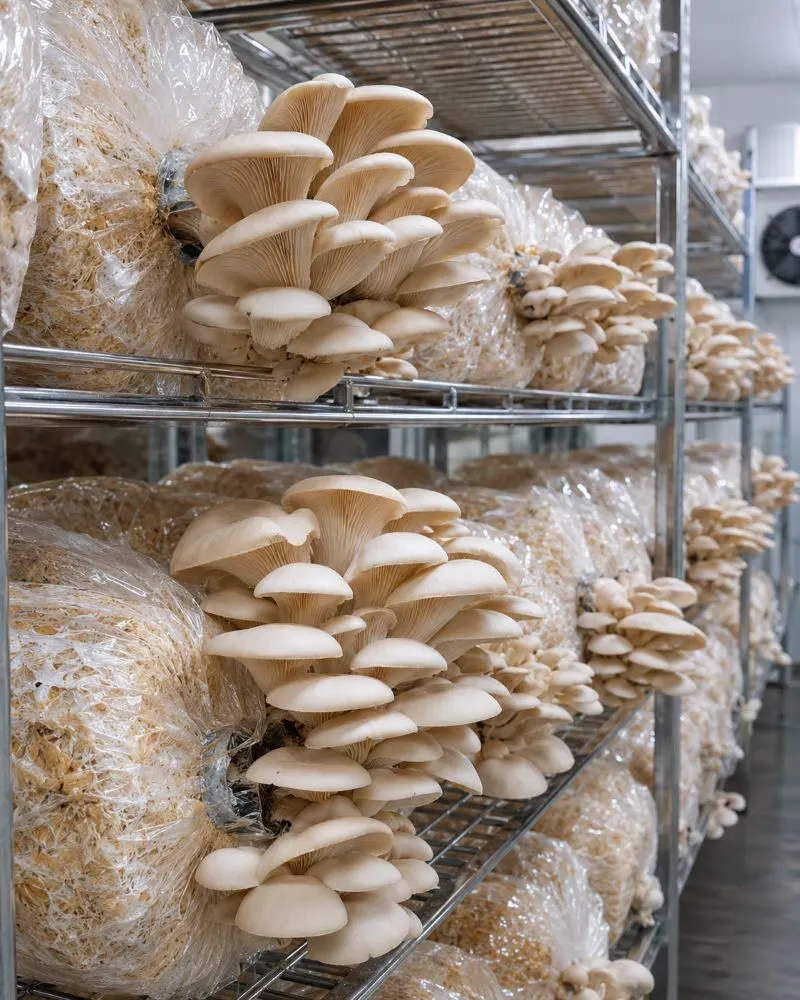
Choosing the right mushroom can determine your success and profitability.
Oyster Mushrooms
Oyster mushrooms are ideal for beginners because they grow aggressively and tolerate mistakes.
Advantages
- Fast growth
- High yields
- Low contamination risk
- Strong market demand
Average Selling Price
- USA: $8–$15 per pound
- UK: £6–£10 per kg
Shiitake Mushrooms
Shiitake mushrooms command premium prices in supermarkets and restaurants.
However, they take longer to fruit compared to oyster mushrooms.
Best For
- Gourmet markets
- Organic shops
- Restaurant supply
Lion’s Mane Mushrooms
Lion’s Mane is exploding in popularity due to its perceived cognitive health benefits.
Many growers earn excellent profits selling fresh Lion’s Mane directly to consumers.
Premium Pricing
- USA retail: $15–$25 per pound
- UK retail: £12–£20 per kg
Step-by-Step Indoor Mushroom Farming Guide
Preparing the Growing Medium
The substrate acts as food for the mushrooms.
Common beginner substrates include:
- Straw
- Hardwood sawdust
- Coco coir
- Coffee grounds
Pasteurisation is crucial. Otherwise, harmful bacteria may destroy your crop.
Basic Pasteurisation Method
- Heat water to 65–80°C
- Soak substrate for 1–2 hours
- Drain excess water
- Cool before inoculation
Inoculation Process
Inoculation means mixing mushroom spawn with the prepared substrate.
Cleanliness matters greatly here.
Use:
- Gloves
- Sanitised tools
- Clean surfaces
- Alcohol spray
Contamination is the biggest beginner problem.
Maintaining Temperature & Humidity
Different mushrooms prefer different temperatures.
| Mushroom | Ideal Temperature |
|---|---|
| Oyster | 15–24°C |
| Shiitake | 18–22°C |
| Lion’s Mane | 16–21°C |
Monitor conditions daily using digital sensors.
Harvesting Mushrooms
Harvest mushrooms before the caps flatten completely.
Twist gently at the base rather than cutting aggressively.
Fresh mushrooms usually stay marketable for:
- 5–10 days refrigerated
- Longer if dried
Common Mistakes Beginners Make
Even simple indoor mushroom farming systems can fail without proper management.
Poor Airflow
Mushrooms need fresh air exchange.
Poor airflow causes:
- Long stems
- Small caps
- Mould growth
A small fan often solves this issue.
Wrong Humidity Levels
Too little humidity dries mushrooms out.
Too much humidity encourages contamination.
Balance is critical.
Contamination Issues
Contamination usually appears as:
- Green mould
- Black spots
- Sour smells
Always sterilise tools and maintain cleanliness.
How Much Space Do You Need?
One reason indoor mushroom farming is attractive is flexibility.
You can scale production gradually.
Small Apartment Setup
A tiny setup may include:
- 1 shelving rack
- 10–20 grow bags
- Humidifier
- LED lighting
Space Required
Approximately 1–2 square metres.
Potential Monthly Yield
10–25 pounds of mushrooms.
Garage Mushroom Farm
Garages offer excellent scalability.
Benefits include:
- Better ventilation
- More shelving
- Easier sanitation
Potential Yield
50–200 pounds monthly.
Basement Growing Ideas
Basements naturally maintain cooler temperatures.
This reduces cooling costs during summer.
However, ensure proper ventilation and moisture management.
Growers with outdoor space may also benefit from learning how to set up a small mushroom farm in your backyard for larger seasonal production.
Indoor Mushroom Farming Costs
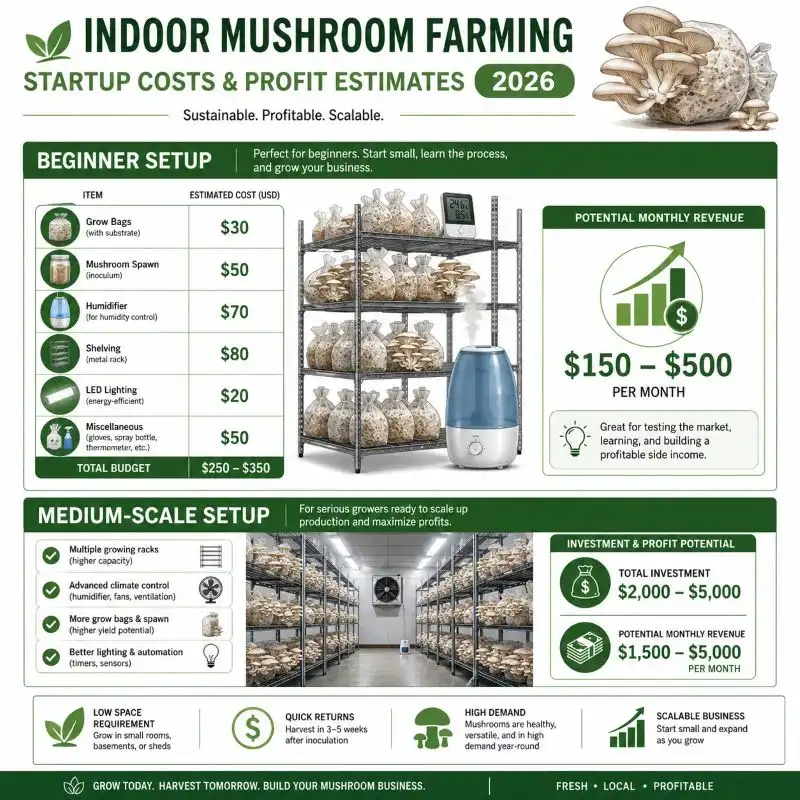
This section matters greatly if you want to turn mushroom growing into income.
Budget Setup
Ideal for beginners testing the market.
| Item | Estimated Cost |
|---|---|
| Grow bags | $30 |
| Spawn | $50 |
| Humidifier | $70 |
| Shelving | $80 |
| LED lighting | $20 |
| Miscellaneous | $50 |
Total Estimated Budget
$250–$350
Potential Monthly Revenue
Small setups can generate:
- $150–$500 monthly
depending on local demand and pricing.
Medium-Scale Setup
A more serious operation may require:
| Item | Estimated Cost |
|---|---|
| Shelving systems | $500 |
| Climate control | $700 |
| Substrate supplies | $300 |
| Commercial humidifiers | $400 |
| Spawn inventory | $300 |
| Packaging materials | $150 |
Total Estimated Investment
$2,000–$5,000
Potential Revenue
Medium growers can generate:
- $1,500–$5,000 monthly revenue
Profit margins often range from 30–50%.
Is It Worth It?
For many small-scale growers, yes.
Indoor mushroom farming offers:
- Low land requirements
- Fast production cycles
- High-value crops
- Flexible scaling
However, sucIf you want a deeper breakdown of earnings, expenses, and long-term return potential, read our guide on “Is Mushroom Farming Profitable in 2026? Startup Cost, ROI & Income Explained” before scaling your indoor setup.cess depends on consistency and local market access.
Best Business Models
1. Farmers’ Markets
Fresh speciality mushrooms sell well directly to consumers.
2. Restaurant Supply
Chefs often pay premium prices for fresh Lion’s Mane and shiitake mushrooms.
3. Subscription Boxes
Weekly mushroom boxes create recurring income.
4. Grow Kits
Many growers make additional income selling DIY mushroom kits online.
Estimated ROI Example
| Setup | Monthly Profit | Estimated Payback |
|---|---|---|
| Small | $150–$300 | 3–6 months |
| Medium | $700–$2,000 | 6–12 months |
That is significantly faster than many traditional farming ventures.
FAQ
Is indoor mushroom farming profitable in 2025?
Yes. Small growers can earn several hundred dollars monthly. Medium operations can generate thousands in revenue annually.
What is the easiest mushroom to grow indoors?
Oyster mushrooms are widely considered the easiest for beginners due to fast growth and lower contamination risks.
How much space is needed for indoor mushroom farming?
A small apartment setup may require only 1–2 square metres. Larger garage systems need more space.
How long does it take to grow mushrooms indoors?
Most oyster mushrooms grow within 3–5 weeks from inoculation to harvest.
Can you grow mushrooms indoors without sunlight?
Yes. Mushrooms do not need direct sunlight. Low-intensity LED lighting is sufficient.
What is the biggest challenge in indoor mushroom farming?
Contamination is the most common issue for beginners. Cleanliness and airflow are essential.
Final Thoughts
Indoor mushroom farming is no longer a niche hobby for gardening enthusiasts wearing muddy boots and talking lovingly to fungi.
It has become a realistic small-business opportunity with low startup costs and strong demand.
Moreover, the industry continues growing as consumers seek healthier and sustainable food options.
If you are serious about starting, begin small. Learn the process. Improve your setup gradually. Then scale once you understand your local market.
If you are ready to turn indoor cultivation into a real business, check out our complete guide on how to start a profitable mushroom farming business in 2025 for step-by-step business strategies.
A spare room today could become a profitable mushroom business tomorrow.