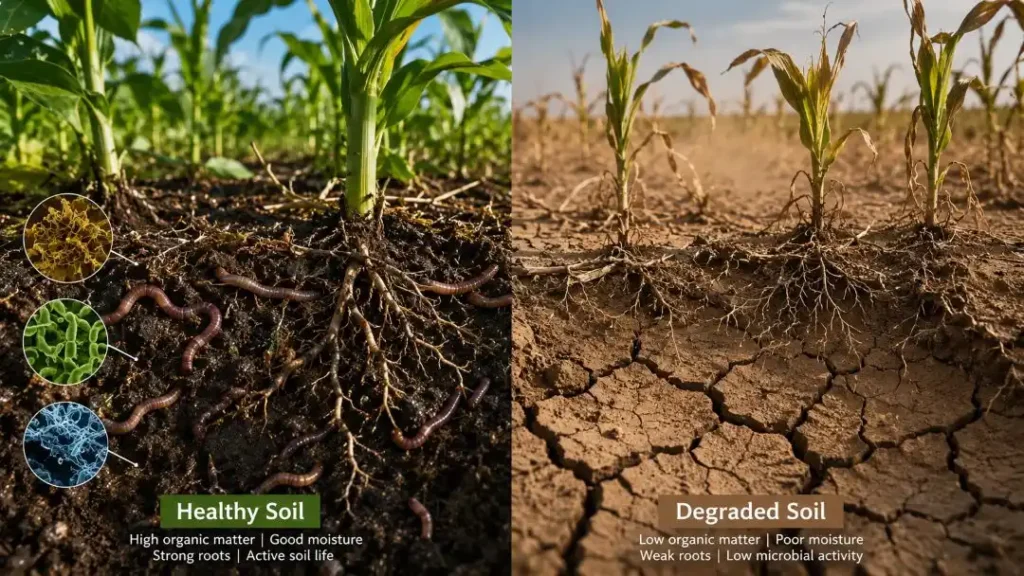
How to Improve Soil Organic Matter
Healthy soil is the backbone of profitable farming. Yet many growers struggle with declining yields, compacted land, and rising fertiliser costs. The good news? Learning how to improve soil organic matter can transform tired soil into a productive, living ecosystem.
Whether you run a small vegetable plot or a large commercial farm, increasing soil organic matter improves fertility, water retention, microbial activity, and long-term profitability. Better still, many of the methods are affordable and environmentally friendly.
Introduction: Why Soil Organic Matter Matters More Than Ever
Modern agriculture has pushed soil hard. Intensive tillage, chemical dependency, and residue burning have reduced soil organic matter across millions of hectares worldwide.
According to the Food and Agriculture Organization, nearly one-third of global soils are moderately to highly degraded. Low organic matter means:
- Poor nutrient retention
- Weak soil structure
- Increased drought stress
- Lower microbial diversity
- Reduced farm profitability
However, farmers who rebuild soil organic matter often report:
- 10–30% higher yields
- Reduced irrigation needs
- Lower fertiliser costs
- Better drought resilience
- Improved long-term soil health
In short, improving soil organic matter is not just about sustainability. It is a serious business decision.
What Is Soil Organic Matter?
Definition of Soil Organic Matter
Soil organic matter refers to decomposed plant and animal materials present in the soil. It includes:
- Crop residues
- Compost
- Manure
- Dead microorganisms
- Humus
Humus is the stable, dark organic component that stores nutrients and improves soil structure.
Why Soil Organic Matter Is Important for Crop Production
Organic matter acts like a sponge and nutrient bank. It helps soil:
- Hold water longer
- Retain nutrients
- Improve aeration
- Support beneficial microbes
- Reduce erosion
A 1% increase in soil organic matter can help soil store roughly 20,000 gallons of additional water per acre.
That is rather handy during drought season.
Signs of Low Organic Matter in Soil
Common warning signs include:
- Hard and compact soil
- Poor drainage
- Crusting after rain
- Weak root growth
- Low earthworm activity
- Heavy fertiliser dependency
- Reduced yields
If your soil looks lifeless and cracks easily, it may need urgent attention.
Benefits of Improving Soil Organic Matter
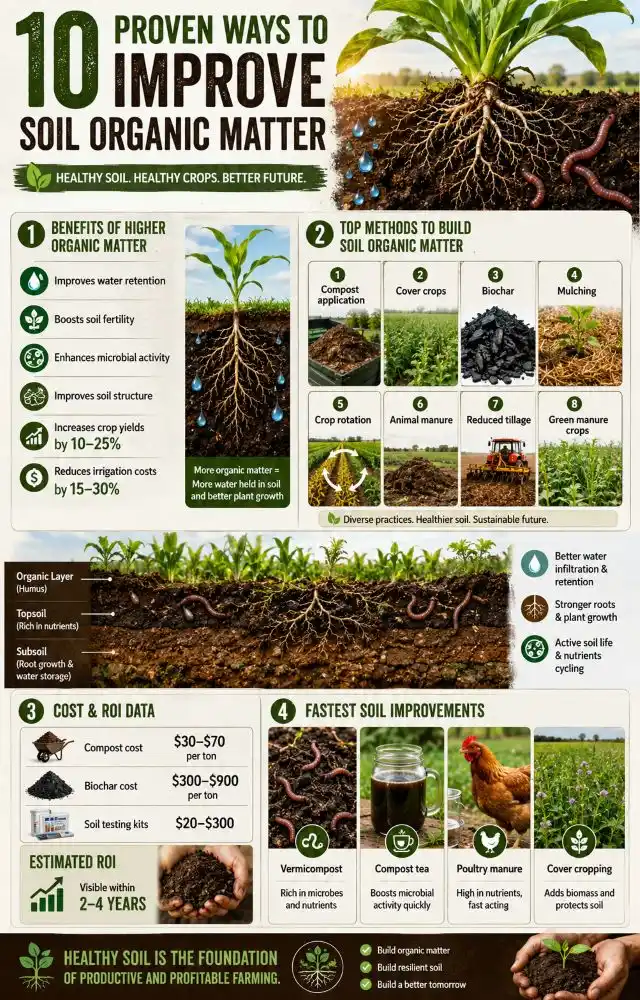
Better Soil Fertility
Organic matter slowly releases nutrients such as:
- Nitrogen
- Phosphorus
- Potassium
- Sulphur
This reduces dependency on expensive synthetic fertilisers.
Improved Water Retention Capacity
Fields rich in organic matter hold moisture longer. Consequently, farmers often reduce irrigation costs by 15–30%.
This is especially valuable in drought-prone regions.
Enhanced Soil Structure and Aeration
Healthy soils become crumbly rather than compacted. Better structure means:
- Easier root penetration
- Improved oxygen flow
- Reduced runoff
Increased Microbial Activity
Beneficial microbes thrive in organic-rich soils. These microbes help:
- Break down nutrients
- Fight soil diseases
- Improve nutrient uptake
Healthy soil is alive. Literally.
Higher Crop Yield and Profitability
Research from regenerative farms in North America shows long-term yield improvements of 10–25%.
Lower input costs plus stable yields often increase farm profits significantly.
Main Causes of Low Organic Matter in Soil
Excessive Tillage
Frequent ploughing speeds up organic matter decomposition and destroys soil structure.
Overuse of Chemical Fertilisers
Chemical fertilisers alone do not feed soil biology. Over time, soil becomes dependent on external inputs.
Soil Erosion
Wind and water erosion remove nutrient-rich topsoil rapidly.
Burning Crop Residues
Residue burning destroys valuable carbon and microbial life.
Unfortunately, it also sends nutrients into the atmosphere instead of back into the soil.
Lack of Cover Cropping
Bare soil loses carbon quickly. Cover crops protect and feed the soil year-round.
Best Methods to Improve Soil Organic Matter
1. Apply Compost Regularly
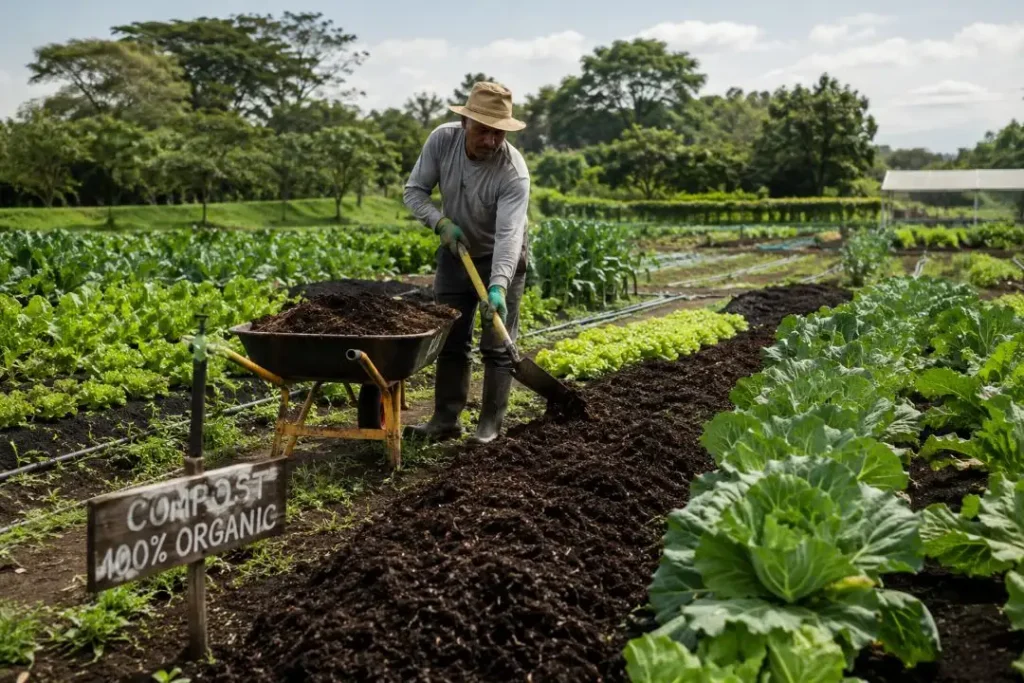
Benefits of Compost
Compost improves:
- Nutrient availability
- Water retention
- Soil structure
- Microbial diversity
Best Compost Types
Popular compost options include:
- Kitchen waste compost
- Green waste compost
- Vermicompost
- Farmyard compost
Application Methods
Typical application rates:
| Farm Type | Compost Rate |
|---|---|
| Vegetables | 5–10 tons/acre |
| Orchards | 3–5 tons/acre |
| Field Crops | 2–5 tons/acre |
Estimated cost in 2026:
- Bulk compost: $30–$70 per ton
- Premium vermicompost: $150–$400 per ton
2. Use Cover Crops
Legume Cover Crops
Excellent options include:
- Clover
- Vetch
- Cowpea
- Alfalfa
Nitrogen Fixation
Legumes naturally fix atmospheric nitrogen, reducing fertiliser costs.
Some farms save £40–£120 per acre annually.
Soil Protection Benefits
Cover crops help:
- Prevent erosion
- Improve soil carbon
- Suppress weeds
- Improve infiltration
3. Add Animal Manure
Cow Dung
Well-composted cow manure improves soil texture and nutrient content.
Poultry Manure
Poultry manure contains higher nitrogen levels but requires careful handling.
Proper Composting Before Application
Fresh manure can:
- Burn crops
- Spread pathogens
- Cause nutrient imbalance
Always compost manure for at least 3–6 months before application.
4. Practice Crop Rotation
How Rotation Improves Soil Biology
Different crops support different microbial communities.
Rotations improve nutrient cycling and break pest cycles.
Best Crop Combinations
Effective rotations include:
- Corn → Soybean → Wheat
- Rice → Legume → Vegetable
- Potato → Cover Crop → Maize
5. Reduce Intensive Tillage
No-Till Farming
No-till systems preserve soil structure and organic carbon.
Farmers often notice improved moisture retention within 2–3 years.
Conservation Agriculture
Conservation practices combine:
- Minimal disturbance
- Permanent soil cover
- Diverse crop rotations
6. Apply Biochar to Soil
What Biochar Is
Biochar is charcoal produced from organic materials under low oxygen conditions.
Benefits for Organic Matter Retention
Biochar helps:
- Store carbon
- Improve microbial habitat
- Increase nutrient retention
Typical cost:
- $300–$900 per ton depending on quality
Although expensive initially, biochar can remain effective for decades.
7. Mulching for Soil Health
Organic Mulch Types
Common mulches include:
- Straw
- Grass clippings
- Wood chips
- Leaf litter
Moisture Conservation Benefits
Mulching can reduce evaporation by up to 70%.
That means less watering and happier crops.
8. Grow Green Manure Crops
Sesbania
Fast-growing and excellent for nitrogen addition.
Sunhemp
Improves biomass and suppresses weeds effectively.
Dhaincha
Widely used in South Asian rice systems for soil enrichment.
9. Retain Crop Residues
Why Residue Burning Harms Soil
Burning destroys:
- Carbon
- Nitrogen
- Beneficial microbes
Residue Incorporation Techniques
Farmers can:
- Chop residues
- Compost residues
- Incorporate residues lightly into soil
10. Use Organic Fertilisers and Microbial Products
Vermicompost
Earthworm-based compost improves microbial activity dramatically.
Microbial Inoculants
Products containing beneficial bacteria and fungi can enhance nutrient uptake.
Humic Acid Products
Humic substances improve root growth and nutrient absorption.
Typical retail cost:
- £15–£40 per litre depending on concentration
Many farmers are now shifting towards organic inputs because they improve long-term soil biology and nutrient availability. You can also read our detailed guide on “Organic Fertilizers: A Sustainable Approach to Soil Health and Crop Yield” to understand how organic fertilisers support healthier soils and sustainable crop production.
Best Soil Amendments for Increasing Organic Matter
Compost vs Biochar
| Feature | Compost | Biochar |
|---|---|---|
| Nutrient Supply | High | Moderate |
| Long-Term Carbon | Moderate | Excellent |
| Cost | Lower | Higher |
| Speed of Results | Faster | Slower |
Compost works quickly, whereas biochar offers longer-term carbon storage.
Vermicompost vs Animal Manure
| Feature | Vermicompost | Animal Manure |
|---|---|---|
| Nutrient Density | High | Moderate |
| Weed Seeds | Low | Possible |
| Cost | Higher | Lower |
| Microbial Activity | Excellent | Good |
Which Soil Amendment Works Fastest?
For rapid improvement:
- Vermicompost
- Compost tea
- Poultry manure
- Cover cropping
Biochar works slower but lasts longer.
How Long Does It Take to Improve Soil Organic Matter?
Short-Term Improvements
Within 6–12 months, farmers often notice:
- Better moisture retention
- Improved root growth
- Increased earthworm activity
Long-Term Soil Regeneration
Significant organic matter increases typically require:
- 3–5 years of consistent management
- Reduced tillage
- Continuous residue retention
Soil improvement is a marathon, not a sprint.
Common Mistakes Farmers Make When Improving Soil
Applying Raw Manure
Fresh manure may introduce pathogens and ammonia toxicity.
Over-Tilling the Soil
Too much tillage destroys aggregates and speeds up carbon loss.
Ignoring Soil Testing
Without testing, farmers may apply unnecessary amendments.
That wastes money quickly.
Using Too Much Chemical Fertiliser
Excessive synthetic fertiliser can reduce microbial diversity over time.
Excessive chemical fertiliser use can reduce microbial activity and damage soil structure over time. To compare the long-term impact of both options, check out our guide on “Organic Fertilizer vs Chemical Fertilizer: What Works Better for Your Garden in 2025?”
Soil Testing Before Improving Organic Matter
Why Soil Testing Matters
Testing helps determine:
- Organic matter percentage
- pH level
- Nutrient deficiencies
- Salinity issues
Soil organic matter works best when soil pH remains balanced. If your crops struggle despite adding compost or manure, our article on “Mastering Soil pH for Healthier Plants and Better Yields” explains how pH affects nutrient availability and plant growth.
Important Soil Parameters to Check
Key indicators include:
- Soil organic carbon
- Nitrogen
- pH
- Cation exchange capacity
- Electrical conductivity
Best Soil Testing Kits for Farmers
Popular 2026 soil testing kits cost:
| Kit Type | Estimated Cost |
|---|---|
| Basic Home Kit | $20–$50 |
| Digital Smart Tester | $80–$300 |
| Professional Lab Test | $50–$150 |
Smart digital kits are increasingly popular among commercial growers.
Regenerative Agriculture and Soil Organic Matter
Connection Between Regenerative Farming and Soil Health
Regenerative agriculture focuses on rebuilding soil naturally through:
- Cover crops
- Reduced tillage
- Crop diversity
- Livestock integration
Climate Change Benefits
Increasing soil organic matter helps capture atmospheric carbon.
This improves climate resilience and reduces greenhouse gas emissions.
Sustainable Farming Advantages
Benefits include:
- Lower input costs
- Better biodiversity
- Improved drought tolerance
- Long-term land productivity
Many regenerative farms now earn premium prices through eco-conscious markets.
Is It Worth It?
Absolutely — both environmentally and financially.
Here is a realistic example for a 50-acre mixed farm:
| Investment | Estimated Annual Cost |
|---|---|
| Compost | $4,000 |
| Cover Crop Seed | $2,500 |
| Reduced Tillage Equipment Adjustment | $1,500 |
| Soil Testing | $500 |
Total Investment:
Approximately $8,500 annually
Potential Financial Returns:
| Benefit | Estimated Value |
|---|---|
| Reduced Fertiliser Costs | $3,000 |
| Reduced Irrigation Costs | $1,500 |
| Yield Increase (10–15%) | $6,000–$12,000 |
| Improved Soil Longevity | Significant |
Estimated ROI:
Positive returns often appear within 2–4 years.
Long-term gains are even stronger because healthier soils require fewer expensive inputs.
Frequently Asked Questions
How to improve soil organic matter quickly?
Use compost, cover crops, vermicompost, and mulch together for faster improvement.
What is the fastest way to increase soil organic matter naturally?
Applying mature compost and planting legume cover crops are among the quickest natural methods.
Does biochar improve soil organic matter?
Yes. Biochar helps retain carbon and improves microbial habitat over the long term.
How often should compost be added to soil?
Most farms benefit from annual or seasonal compost applications.
Can chemical fertilisers replace organic matter?
No. Fertilisers supply nutrients, but they do not improve soil biology or structure.
Conclusion
Learning how to improve soil organic matter is one of the smartest investments any farmer can make. Healthy soil boosts productivity, improves resilience, lowers costs, and supports long-term sustainability.
Start small if necessary. Even simple changes like adding compost, reducing tillage, or planting cover crops can make a noticeable difference within a single season.
Healthy soil is not built overnight. However, every improvement today creates stronger harvests tomorrow.
And frankly, your earthworms will thank you for it.