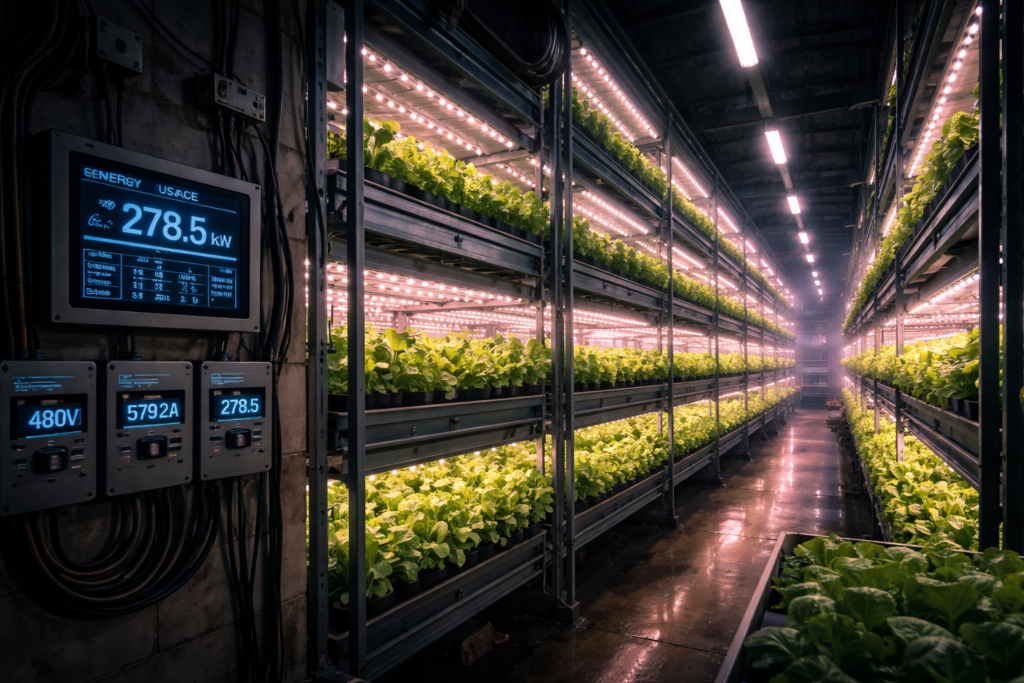
Electricity is one of the most important operating costs in indoor agriculture. Understanding the vertical farming electricity cost is essential before starting a commercial indoor farm because lighting, climate control, and automation systems run continuously.
In many vertical farms, energy expenses can account for up to 40% of total operating costs, making electricity the single most important factor affecting profitability.
This is why energy efficiency plays a critical role in determining whether a vertical farm can achieve sustainable profit.
If you want to understand the total investment required to launch an indoor farm, see our detailed guide on vertical farming startup cost:
In this article, we break down real electricity consumption, monthly operating costs, and the main factors that influence energy use in vertical farming.
How Much Electricity Does a Vertical Farm Use?
Electricity consumption in vertical farms depends on lighting systems, crop type, and climate control requirements.
Typical energy consumption data shows:
| Metric | Typical Value |
|---|---|
| Energy consumption | 11–40 kWh per kg of produce |
| Typical LED power demand | ~100 watts per m² |
| Lighting duration | 12–18 hours per day |
Modern high-efficiency farms may reach 11–15 kWh per kg, while older facilities can exceed 40 kWh per kg of produce.
In practical terms, this means energy consumption can vary dramatically depending on technology and operational efficiency.
Electricity Consumption by Crop Type
| Crop Type | Average Energy Use | Typical Growth Cycle |
|---|---|---|
| Microgreens | 6–8 kWh per kg | 7–21 days |
| Lettuce | 10–15 kWh per kg | 30–40 days |
| Basil | 12–18 kWh per kg | 25–35 days |
| Kale | 15–20 kWh per kg | 40–50 days |
| Strawberries | 20–35 kWh per kg | 60–90 days |
Insight:
Leafy greens generally consume less electricity than fruiting crops, which is why most commercial vertical farms focus on crops like lettuce, basil, and microgreens.
Electricity Cost per Square Foot
Many growers prefer to estimate electricity costs based on growing area.
Industry estimates suggest:
| Farm Size | Average Electricity Cost |
|---|---|
| Small vertical farms | ~$3.45 per sq ft |
| Large commercial farms | ~$8.02 per sq ft |
These values depend on local electricity prices and energy efficiency of the facility.
Large farms often pay higher total energy bills because they operate larger lighting and climate systems.
The Main Energy Consumers in Vertical Farms
Electricity consumption in vertical farming mainly comes from three systems.
1. LED Grow Lights
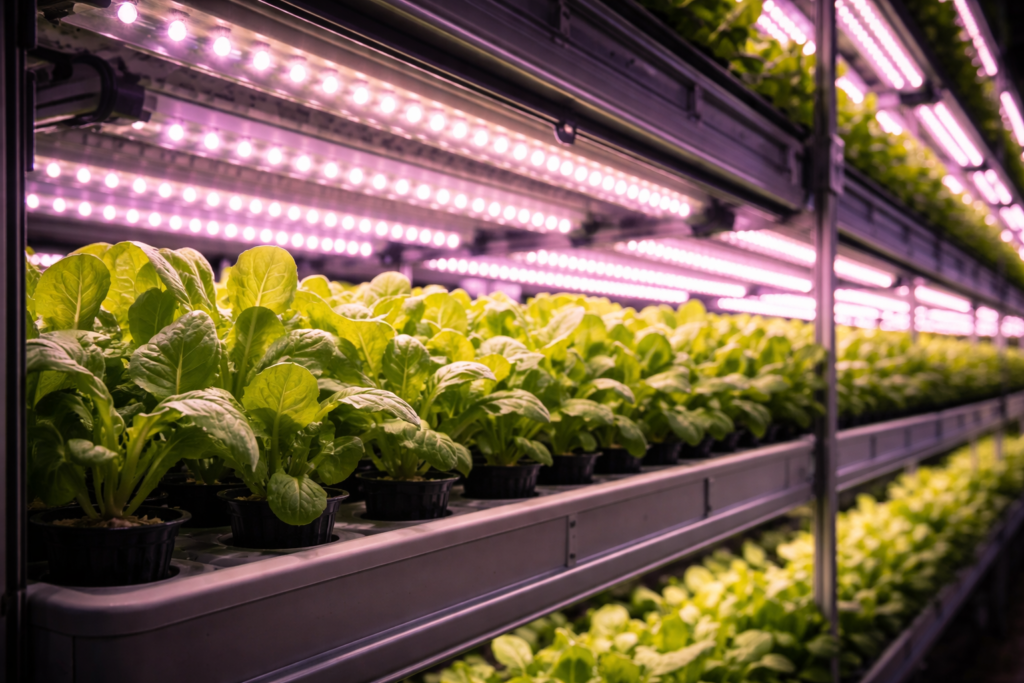
Lighting is the largest electricity expense in most vertical farms.
Studies show LED lighting accounts for 50–65% of total electricity consumption in indoor farms.
Typical LED requirements include:
| System | Power Use |
|---|---|
| LED lighting | ~100 watts per m² |
| Lighting duration | 12–18 hours daily |
Each layer of crops requires its own LED lighting system, which is why stacked vertical farms consume more electricity than greenhouses.
However, LEDs are far more efficient than older technologies like high-pressure sodium lamps.
2. Climate Control (HVAC Systems)
Maintaining the correct temperature and humidity requires continuous climate control.
HVAC systems manage:
- temperature
- humidity
- airflow
- CO₂ levels
These systems often represent 20–30% of the total electricity use in indoor farms.
Humidity control is particularly important because plants release large amounts of water vapor during growth.
3. Pumps, Sensors, and Automation
Although smaller than lighting and HVAC, several other systems also consume electricity.
These include:
- water pumps
- nutrient dosing systems
- air circulation fans
- sensors and monitoring equipment
- automation systems
While each component uses relatively little energy, together they contribute to the farm’s total electricity consumption.
Vertical Farming Energy Consumption Breakdown
| System | Share of Total Energy Use |
|---|---|
| LED Grow Lights | 50–65% |
| HVAC & Climate Control | 20–30% |
| Pumps & Irrigation | 5–10% |
| Sensors & Automation | 2–5% |
Insight:
Lighting represents the largest electricity demand because each growing layer requires its own light source.
Example: Monthly Electricity Cost for a Small Vertical Farm
Let’s estimate electricity costs for a small indoor farm.
Assumptions:
- Growing area: 1,000 sq ft
- Electricity cost: $0.15 per kWh
- Lighting: 14 hours per day
Estimated energy breakdown:
| System | Monthly Electricity Cost |
|---|---|
| LED lighting | $1,200 |
| HVAC & dehumidification | $500 |
| Pumps and equipment | $150 |
Estimated monthly electricity cost:
≈ $1,850
This simplified example illustrates why electricity costs must be carefully considered before starting a vertical farming business.
Estimated Electricity Cost by Farm Size
| Farm Size | Monthly Electricity Cost |
|---|---|
| 500 sq ft farm | $800 – $1,200 |
| 1,000 sq ft farm | $1,500 – $2,000 |
| 5,000 sq ft farm | $6,000 – $9,000 |
| 10,000 sq ft farm | $12,000 – $18,000 |
Insight:
Electricity cost increases significantly as farms scale up because lighting and climate control systems operate across multiple growing layers.
Electricity Cost per Crop
Energy consumption also varies depending on crop type.
Typical estimates show that vertical farms may require about 17.6 kWh of electricity per pound of produce in conventional systems.
Energy-efficient systems may reduce this to 6–8 kWh per pound with improved automation and lighting efficiency.
Crops that require lower light intensity, such as leafy greens, generally consume less electricity than fruiting crops.
How Electricity Cost Affects Vertical Farming Profitability
Energy expenses have a direct impact on vertical farming profitability.
Higher electricity costs increase the production cost of each crop, which reduces profit margins.
For example:
| Factor | Impact |
|---|---|
| High electricity price | Higher crop production cost |
| Efficient LED lighting | Lower energy use |
| Fast-growing crops | Better energy efficiency |
This is why many vertical farms focus on crops like microgreens and lettuce that grow quickly and require relatively lower energy input.
If you want to understand how crop selection affects revenue, see our guide on Vertical Farming Profit per Square Foot:
How Vertical Farms Reduce Electricity Costs
Successful indoor farms use several strategies to improve energy efficiency.
1. High-Efficiency LED Lighting
Modern LED grow lights are far more efficient than earlier lighting systems.
Improved LED technology can significantly reduce electricity consumption while maintaining optimal plant growth.
2. Optimised Lighting Schedules
Many farms use automated lighting schedules to match plant growth stages.
Reducing unnecessary lighting hours helps lower energy costs.
3. Advanced Climate Control Systems
Modern HVAC systems use smart sensors to optimise temperature and humidity.
Efficient climate control can reduce electricity consumption significantly.
4. Renewable Energy Integration
Some vertical farms install solar panels or purchase renewable electricity from the grid.
Although solar energy cannot fully power most large vertical farms, it can help offset electricity costs.
Is Electricity the Biggest Cost in Vertical Farming?
Electricity is one of the most significant expenses, but it is not always the largest cost.
Other major operating expenses include:
- labour
- facility rent
- packaging and logistics
- equipment depreciation
However, electricity remains the most critical technical cost because it directly affects crop production and operating efficiency.
Future of Energy Efficiency in Vertical Farming
Energy efficiency is rapidly improving as technology evolves.
Key innovations include:
- higher efficiency LED lighting
- AI-driven climate control systems
- improved crop genetics for indoor growth
- automated growing systems
These technologies are gradually reducing the energy footprint of vertical farming and making indoor agriculture more economically viable.
Conclusion
Understanding vertical farming electricity cost is essential for evaluating the financial viability of indoor agriculture.
Electricity powers lighting, climate control, and automation systems that allow crops to grow in controlled environments. However, these systems also represent one of the largest operating costs for indoor farms.
By selecting energy-efficient technologies, optimising lighting schedules, and focusing on high-value crops, vertical farms can significantly improve profitability while reducing their energy footprint.
As technology continues to improve, energy efficiency will remain one of the most important factors shaping the future of vertical farming.
The Agro Reality Newsletter
Get weekly insights on crops, livestock, sustainable practices, agricultural economics, and real-world farming challenges—delivered to your inbox.