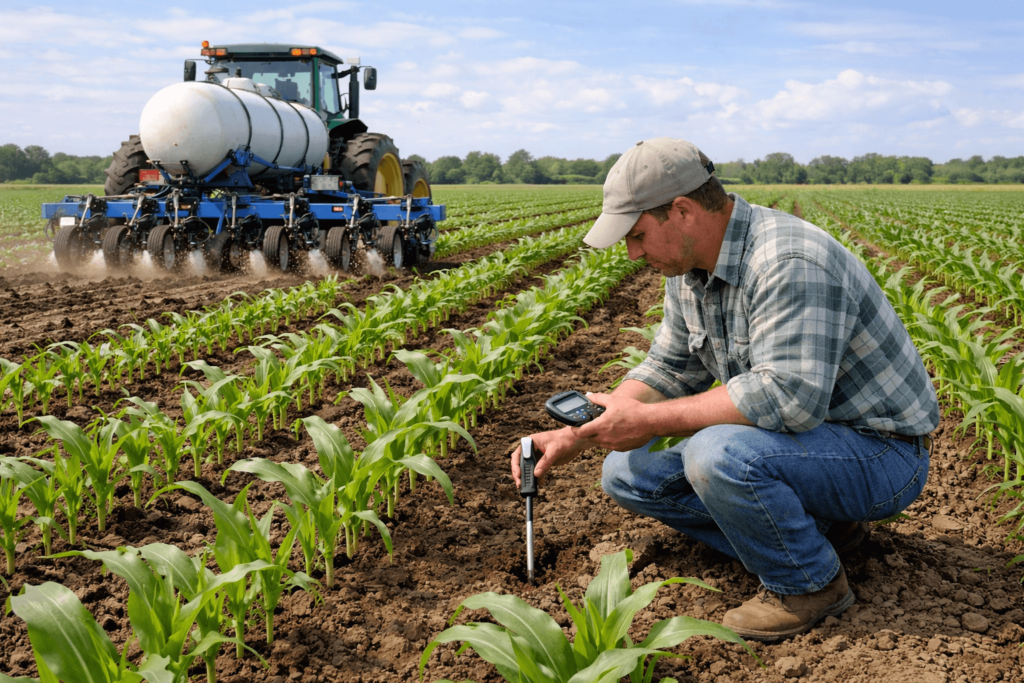
Nitrogen fertiliser is one of the largest expenses in corn production. Yet many farmers still struggle to reduce nitrogen loss in corn fields. In many cases, a large portion of applied nitrogen never reaches the crop.
Rainfall, poor fertiliser timing, and soil conditions often move nitrogen away from the root zone. As a result, farmers lose money while corn plants receive less nutrition.
The good news is that farmers can reduce nitrogen loss in corn fields by using a few simple management practices. Small adjustments in fertiliser timing and soil management can greatly improve nitrogen efficiency.
In this guide, we explain why nitrogen loss happens and how farmers can reduce nitrogen loss in corn fields with a practical strategy.
Nitrogen loss is a major concern for many corn farmers in the United States. Research from the United States Department of Agriculture shows that improving nitrogen management can significantly increase nutrient efficiency and reduce environmental loss.
Why Nitrogen Loss Happens in Corn Fields
Nitrogen is a very mobile nutrient in the soil. Because of this, it can easily move away from the plant root zone.
Several factors contribute to nitrogen loss in corn production.
Heavy Rainfall
Heavy rain is one of the main reasons farmers struggle to reduce nitrogen loss in corn fields.
When rainfall occurs soon after fertiliser application, nitrogen moves deeper into the soil. This process is known as leaching.
Sandy soils are especially vulnerable to this problem.
Surface Runoff
Surface runoff is another common issue. When fertiliser remains on the soil surface, rainwater can wash it away from the field.
This situation often occurs in sloped land or compacted soils.
Volatilisation
Nitrogen can also escape into the air. This process is called volatilisation.
Warm temperatures and dry conditions increase this risk. Surface-applied urea fertilisers are particularly vulnerable.
How Much Nitrogen Farmers Actually Lose
Many farmers underestimate how much nitrogen disappears from their fields.
Research suggests that 30–50% of applied nitrogen can be lost under certain conditions. These losses increase production costs and reduce fertiliser efficiency.
Therefore, improving nitrogen management is essential for farmers who want to reduce nitrogen loss in corn fields and protect their profit margins.
A Simple Way to Reduce Nitrogen Loss in Corn Fields
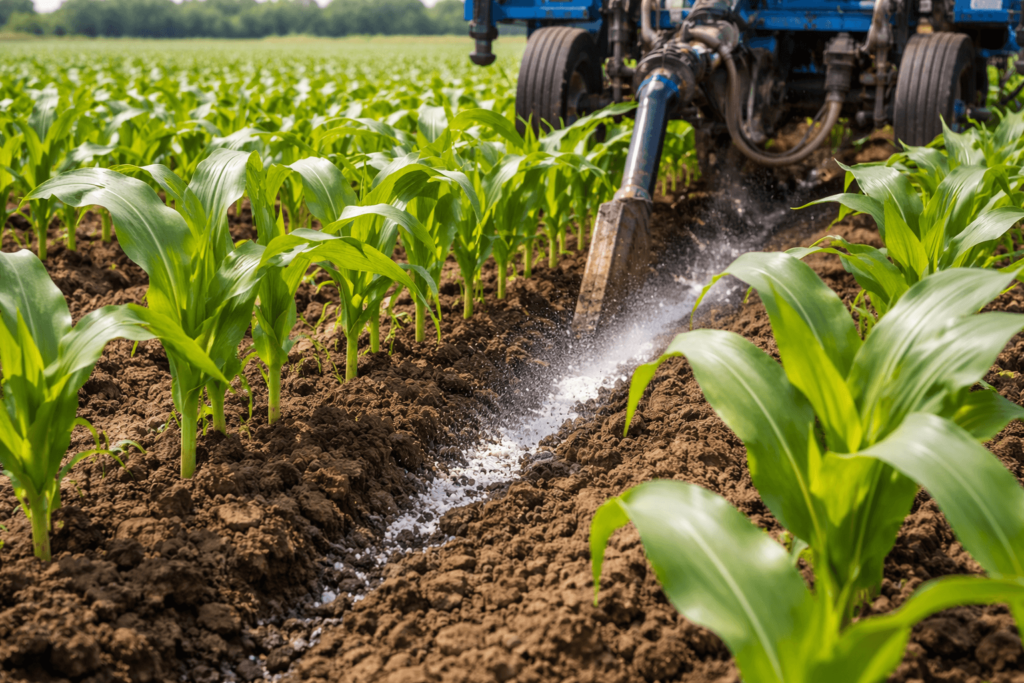
One of the most effective strategies to reduce nitrogen loss in corn fields is split nitrogen application.
Instead of applying all fertiliser at once, farmers apply smaller amounts during different crop growth stages.
This method improves nitrogen availability when the corn plant needs it most.
Split application also reduces the risk of leaching, runoff, and volatilisation.
How Split Application Helps Reduce Nitrogen Loss in Corn Fields
Corn plants do not require large amounts of nitrogen early in the season. However, nitrogen demand increases rapidly during later growth stages.
Split application matches fertiliser supply with crop demand.
For example, nitrogen can be applied in three stages:
• At planting or pre-plant
• Early vegetative stage
• Mid-season side-dress application
This approach helps farmers reduce nitrogen loss while improving fertiliser efficiency.
Best Practices to Reduce Nitrogen Loss in Corn Fields
Agronomists from Purdue University recommend split nitrogen application to minimise nitrogen loss in corn fields.
Split application works best when combined with other good management practices.
Below are several strategies that can help farmers reduce nitrogen loss.
Studies from International Maize and Wheat Improvement Center show that split nitrogen application can improve nitrogen use efficiency and reduce environmental loss.
Check Weather Before Fertiliser Application
Always review the weather forecast before applying fertiliser.
Heavy rain shortly after application can wash nitrogen away. Therefore, apply fertiliser during stable weather conditions.
Conduct Soil Testing
Soil testing helps farmers understand existing nutrient levels.
Without testing, farmers may apply more nitrogen than necessary. Accurate soil data helps farmers reduce nitrogen loss while saving fertiliser costs.
Improve Soil Health
Healthy soils retain nutrients more effectively.
Practices such as cover cropping and organic matter management improve soil structure. As a result, nutrients stay available to crops for longer periods.
Place Fertiliser Near the Root Zone
Fertiliser placement can improve nitrogen use efficiency.
Band placement or side-dressing methods often perform better than surface broadcasting.
Environmental Benefits of Reducing Nitrogen Loss
Reducing nitrogen loss does more than save money.
Excess nitrogen that leaves the field can contaminate rivers and lakes. It may also contribute to nutrient pollution and ecosystem damage.
Therefore, efforts to reduce nitrogen loss support both farm profitability and environmental sustainability.
Final Thoughts
Nitrogen fertiliser plays a critical role in corn production. However, poor management often leads to significant nutrient loss.
Fortunately, farmers can reduce nitrogen loss by using simple strategies. Split nitrogen application, soil testing, and proper timing are highly effective.
Even small improvements in fertiliser management can increase efficiency and protect farm profits.
As farming costs continue to rise, smarter nitrogen management will become even more important.
Another effective way to improve soil fertility and reduce nutrient loss is by using cover crops. You can learn more in our guide on The Role of Cover Crops in Regenerative Agriculture
FAQ
What causes nitrogen loss in corn fields?
Nitrogen loss mainly occurs through leaching, runoff, and volatilisation. Heavy rainfall and poor fertiliser timing increase these risks.
What is the best way to reduce nitrogen loss in corn fields?
Split nitrogen application is one of the most effective methods. It matches fertiliser supply with crop nutrient demand.
Why is nitrogen management important for corn farmers?
Good nitrogen management improves fertiliser efficiency, reduces production costs, and protects soil health.