Looking for Profitable Crops for Small Farms Canada that actually make money—not just Instagram-worthy harvest photos? You’re not alone. Many small-scale farmers struggle to balance passion with profit. The good news? Canada’s diverse climate offers surprisingly lucrative opportunities if you choose the right crops. From high-value herbs to greenhouse vegetables, small farms can generate serious income—often on just a few acres. In this guide, we’ll break down the most profitable crops, real costs, expected returns, and how to turn your small farm into a sustainable income stream.
If you’re serious about turning your land into a sustainable income source, it’s worth exploring the complete guide on small farm profitability in Canada. This will help you understand the bigger picture beyond just choosing crops.
The Problem & Opportunity
Small farming in Canada isn’t easy. Land costs are high. Labour isn’t cheap. And let’s not even start on unpredictable weather.
However, here’s the opportunity…
Consumers are shifting toward:
- Organic produce
- Locally grown food
- Specialty crops
- Sustainable agriculture
This means higher prices and niche markets—perfect for small farms.
The key? Grow high-value, fast-turnover, or niche crops instead of bulk commodities like wheat or corn.
7 Profitable Crops for Small Farms Canada
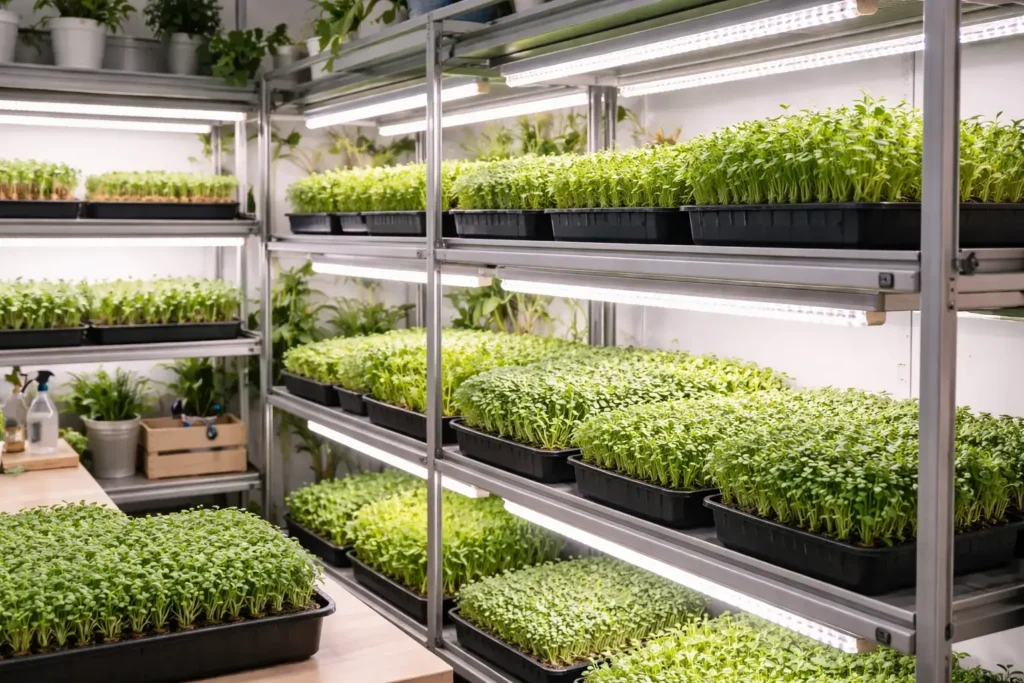
1. Microgreens (Fast Cash Crop)
Why they work:
- Grow in 7–21 days
- High demand in urban markets
- Can be grown indoors year-round
Cost Breakdown:
- Setup (trays, lights, seeds): $500–$2,000
- Monthly cost: $100–$300
Profit Potential:
- Revenue: $20–$40 per tray
- Monthly income: $1,000–$5,000 (small setup)
ROI:
- Break-even: 1–2 months
Garlic (Low Maintenance, High Demand)
Why it’s profitable:
- Long shelf life
- High demand in farmers’ markets
- Organic garlic sells premium
Cost:
- Seed garlic: $300–$800 per acre
- Labour: Moderate
Revenue:
- $8–$15 per pound
- Yield: 4,000–6,000 lbs/acre
ROI:
- Profit: $15,000–$40,000 per acre
Garlic is one of the most reliable and low-maintenance crops for Canadian small farms. If you want a step-by-step breakdown of costs, yield, and profit margins, check out this detailed guide on garlic farming for profit.
Lavender (Value-Added Goldmine)

Why it shines:
- Multiple income streams (oil, soap, dried bundles)
- Tourism potential
Cost:
- Plants: $3–$5 each
- Setup (per acre): $5,000–$10,000
Revenue:
- Essential oil + products: $20,000+/acre
Bonus:
You can create lavender-based products—hello, premium pricing.
Mushrooms (Indoor Profit Machine)
Why mushrooms:
- Year-round production
- Requires minimal land
- High restaurant demand
Cost:
- Setup: $2,000–$10,000
- Substrate: Low cost
Revenue:
- $6–$12 per pound
- Yield: 25 lbs/week (small farm)
Monthly Profit:
- $1,500–$6,000
Mushroom farming is ideal for year-round income, especially in controlled indoor environments. For a complete beginner-friendly setup and business plan, explore this guide on how to start a profitable mushroom farming business.
5. Berries (Strawberries, Blueberries, Raspberries)
Why berries:
- High demand
- Pick-your-own model adds revenue
Cost:
- Setup: $8,000–$15,000 per acre
Revenue:
- $20,000–$50,000 per acre
Tip:
Direct-to-consumer sales increase profits significantly.
6. Ginseng (Long-Term Investment)
Why it’s lucrative:
- Extremely high value
- Export demand
Cost:
- Setup: $20,000–$30,000 per acre
Revenue:
- Up to $100,000+ per acre
Catch:
- Takes 4–6 years to mature
7. Greenhouse Vegetables (Tomatoes, Peppers)
Why greenhouse farming:
- Controlled environment
- Year-round production
Cost:
- Greenhouse setup: $10,000–$50,000
Revenue:
- $15–$30 per sq. metre annually
ROI:
- High, especially in urban supply chains
Cost Breakdown Summary (Quick View)
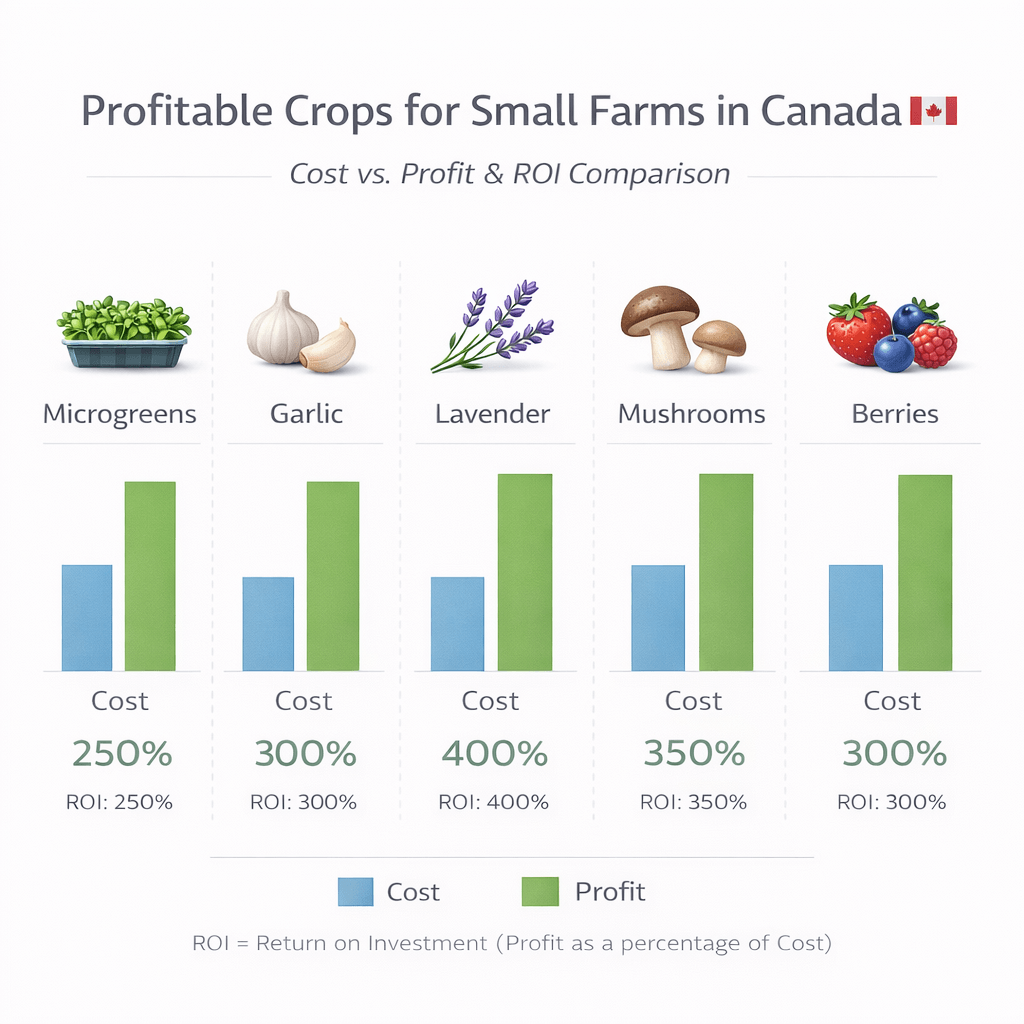
| Crop | Startup Cost | Profit Potential | ROI Time |
|---|---|---|---|
| Microgreens | $500–$2,000 | $1K–$5K/month | 1–2 months |
| Garlic | $300–$800 | $15K+/acre | 1 year |
| Lavender | $5K–$10K | $20K+/acre | 2–3 years |
| Mushrooms | $2K–$10K | $1.5K–$6K/month | 3–6 months |
| Berries | $8K–$15K | $20K–$50K/acre | 2 years |
| Ginseng | $20K+ | $100K+/acre | 4–6 years |
| Greenhouse Veg | $10K–$50K | High | 1–2 years |
Tools & Equipment (With Price Ranges)
To run a profitable small farm, you’ll need:
Essential Tools:
- Grow lights: $100–$500
- Irrigation system: $200–$2,000
- Greenhouse kit: $5,000–$30,000
- Soil testing kit: $50–$150
- Cold storage unit: $1,000–$5,000
Optional (But Smart Investments):
- Automated climate control: $500–$3,000
- Packaging equipment: $200–$1,000
Step-by-Step Guide to Start
Step 1: Choose Your Crop
Focus on:
- Market demand
- Climate suitability
- Budget
Step 2: Validate Market
Sell through:
- Farmers’ markets
- Local restaurants
- CSA subscriptions
Step 3: Start Small
Test with:
- 0.25–0.5 acre
- Indoor setup for microgreens/mushrooms
Step 4: Scale Gradually
Reinvest profits into:
- Equipment
- Expansion
- Marketing
Challenges + Smart Solutions
1. Climate Risk
Solution: Use greenhouses or indoor farming
2. Market Access
Solution: Build direct sales channels
3. Labour Costs
Solution: Automate where possible
4. Cash Flow Issues
Solution: Combine short-term (microgreens) with long-term crops (ginseng)
Market Opportunities in Canada
- Organic produce demand growing 8–10% annually
- Local food movement expanding
- Restaurants prefer local sourcing
- Export opportunities for specialty crops
Is It Worth It?
Let’s be honest.
Small farming isn’t a get-rich-quick scheme.
However…
If done right, it can generate:
- $30,000–$100,000/year from small acreage
- Multiple income streams
- Long-term sustainability
Best Strategy:
Combine:
- Fast income crops: Microgreens, mushrooms
- Medium-term crops: Garlic, berries
- Long-term investments: Ginseng
👉 This creates stable and scalable income.
FAQ Section
1. What are the most profitable crops for small farms in Canada?
Microgreens, mushrooms, garlic, and lavender are among the most profitable due to high demand and margins.
2. How much land do I need to start?
You can start with as little as 500–1,000 sq. ft., especially for indoor crops.
3. Which crop gives the fastest return?
Microgreens offer returns within 2–3 weeks, making them ideal for beginners.
4. Is greenhouse farming profitable in Canada?
Yes, especially for tomatoes and peppers due to year-round production.
5. Can I start farming with low investment?
Yes. Start with microgreens or garlic under $1,000.
Conclusion
Choosing the right crops can turn a small Canadian farm into a profitable business.
Start small. Think smart. Diversify.
The real secret?
👉 Grow what the market wants—not just what the soil allows.
If you combine strategy with consistency, your small farm can become a reliable income source- and maybe even your dream lifestyle.