Starting a farm in the United States involves more than land and equipment—it requires proper risk management. Weather uncertainty, crop failure, and market volatility can significantly affect farm income. That is why understanding the farm insurance cost in the USA per acre is essential before making any investment decision.
In 2026, farm insurance costs vary based on location, crop type, and coverage level. However, having a clear idea of average costs can help farmers plan their budget and reduce financial risk.
If you are new to farm insurance and want to understand different types of policies and coverage options, start with our beginner guide Farm Insurance 101: What Every New Farmer in the USA Should Know.
Average Farm Insurance Cost per Acre in the United States
The average cost of farm insurance in the United States typically ranges between:
$15 and $50 per acre
In some cases, depending on the level of coverage and risk exposure, premiums can rise to:
$40 to $85 per acre
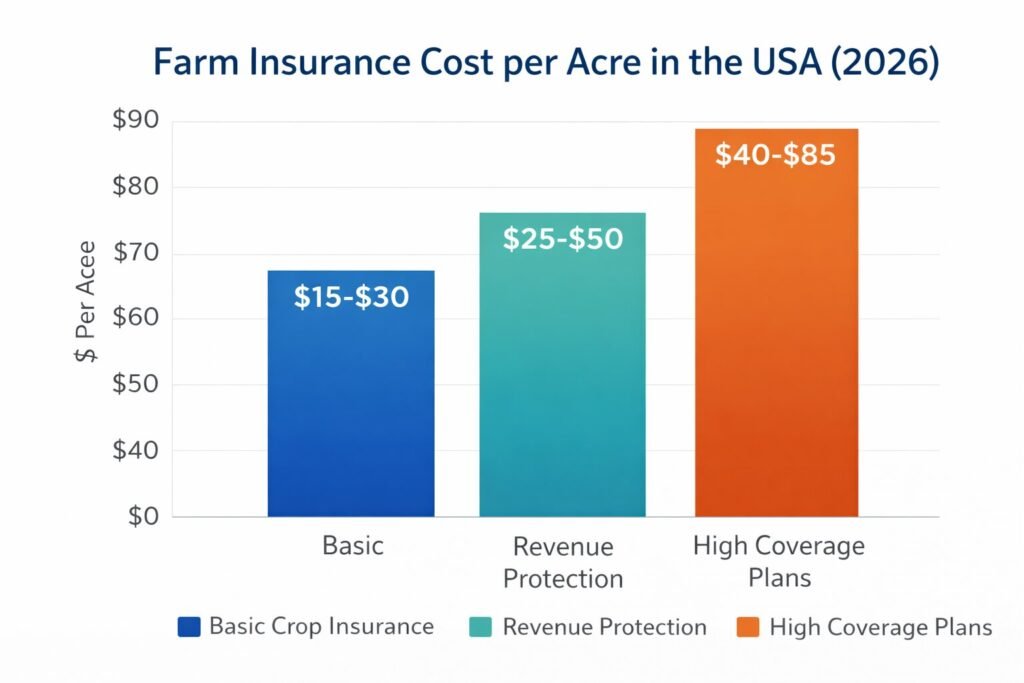
Cost Breakdown by Coverage Type
| Insurance Type | Average Cost per Acre (USD) |
|---|---|
| Basic Crop Insurance | $15 – $30 |
| Revenue Protection | $25 – $50 |
| High Coverage Plans | $40 – $85 |
The cost may vary depending on your location in the United States and the specific insurance provider you choose.
Factors That Affect Farm Insurance Cost
Several important factors determine how much farmers pay per acre in the United States.
Location and Climate Risk
Farms located in areas prone to drought, flooding, or hailstorms typically face higher premiums. High-risk regions may see costs increase by 25% to 50%.
Crop Type
Different crops carry different levels of risk. For example:
- Corn and soybeans generally have lower insurance costs
- Cotton and specialty crops tend to have higher premiums
Coverage Level
Basic policies cost less but provide limited protection. Comprehensive coverage plans, such as revenue protection, offer broader protection but at a higher price.
Farm Size
Larger farms often benefit from lower per-acre costs due to economies of scale, while smaller farms may pay slightly higher premiums per acre.
Real Example of Farm Insurance Cost

Consider a typical corn farmer in the United States:
- Total premium: approximately $30 per acre
- After government subsidy: $15 to $20 per acre
This example shows how government support helps reduce the actual cost paid by farmers.
Why Farm Insurance Is More Affordable in the United States
One of the key reasons farm insurance is widely used in the United States is government support.
Through federal programmes, farmers often pay only 35% to 45% of the total premium, while the rest is subsidised. This system encourages farmers to adopt insurance and protect their operations against major losses.
How to Reduce Farm Insurance Cost
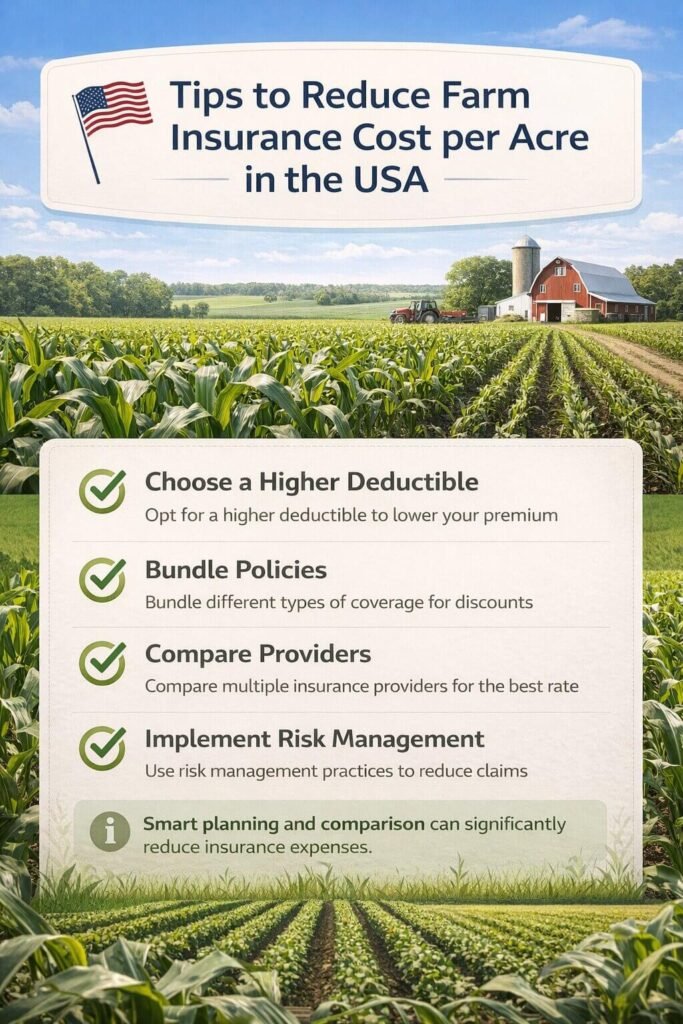
Farmers can take several steps to lower their insurance expenses:
- Choose a higher deductible
- Compare multiple insurance providers
- Bundle different types of coverage
- Implement risk management practices
Careful planning and comparison can significantly reduce overall costs.
Frequently Asked Questions
What is the average farm insurance cost per acre in the United States?
The average cost ranges between $15 and $50 per acre, depending on coverage and risk factors.
Why does farm insurance cost vary by state?
Costs vary due to differences in climate, soil conditions, and crop risk across different regions.
Is farm insurance worth it in the United States?
Yes. Farm insurance provides essential financial protection against unpredictable risks such as natural disasters and crop failure.
Conclusion
Understanding the farm insurance cost in USA per acre is crucial for farmers planning their operations in 2026. While average costs range from $15 to $50 per acre, the final premium depends on multiple factors, including location, crop type, and coverage level.
Farmers should carefully compare available options and select a policy that balances affordability with adequate protection.