Agroreality

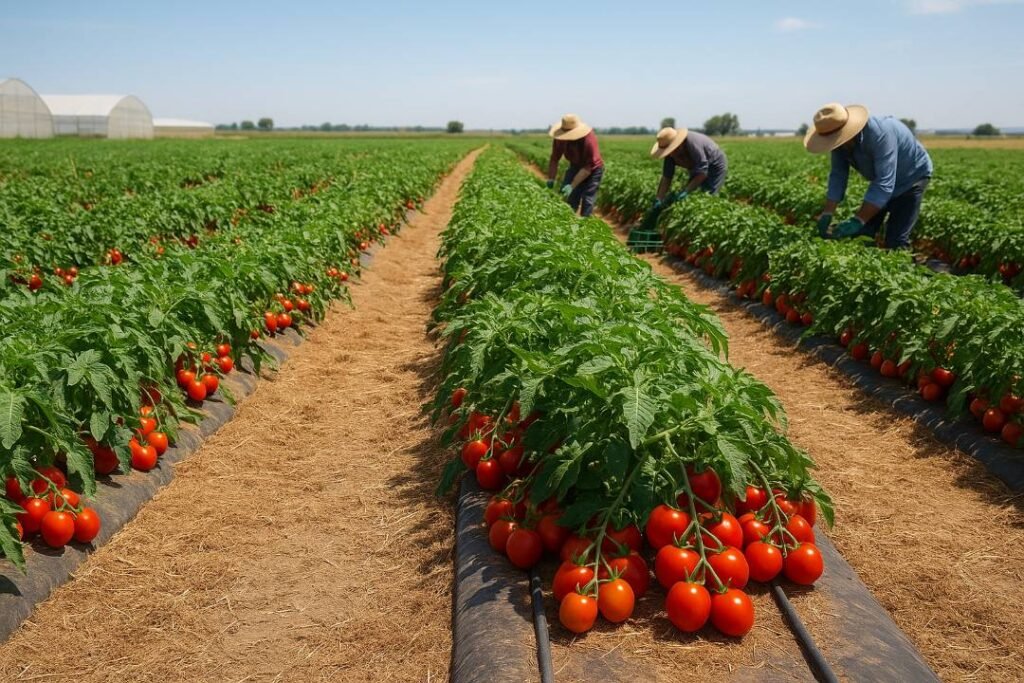
Image of a large commercial tomato farm with ripe tomatoes, workers, and irrigation system.

Tomato Farming Guide for Smallholders: Best Varieties, Fertilizers, Pest Control & Commercial Tips (2025)

Introduction Tomatoes are among the most commercially valuable vegetable crops in the world, with global production exceeding 189 million metric tons in 2022, according to FAO statistics. Smallholder farmers across Western regions like the USA, UK, Australia, and Europe are increasingly turning to tomato farming due to its high market demand, fast-growing cycle, and multiple

Tomato Farming Guide for Smallholders: Best Varieties, Fertilizers, Pest Control & Commercial Tips (2025) Read More »

A farmer standing between a sunny green field and a dry stormy field, symbolizing climate change impacts on farming

Climate Change and Crop Yields: Global Challenges

Introduction Climate change is no longer a distant threat; it is happening now, directly impacting our environment, economies, and most importantly, our food supply. One of the most alarming effects is on agricultural productivity, particularly crop yields. Farmers across the world, from Asia to North America, are grappling with unpredictable weather patterns, rising temperatures, and

Climate Change and Crop Yields: Global Challenges Read More »

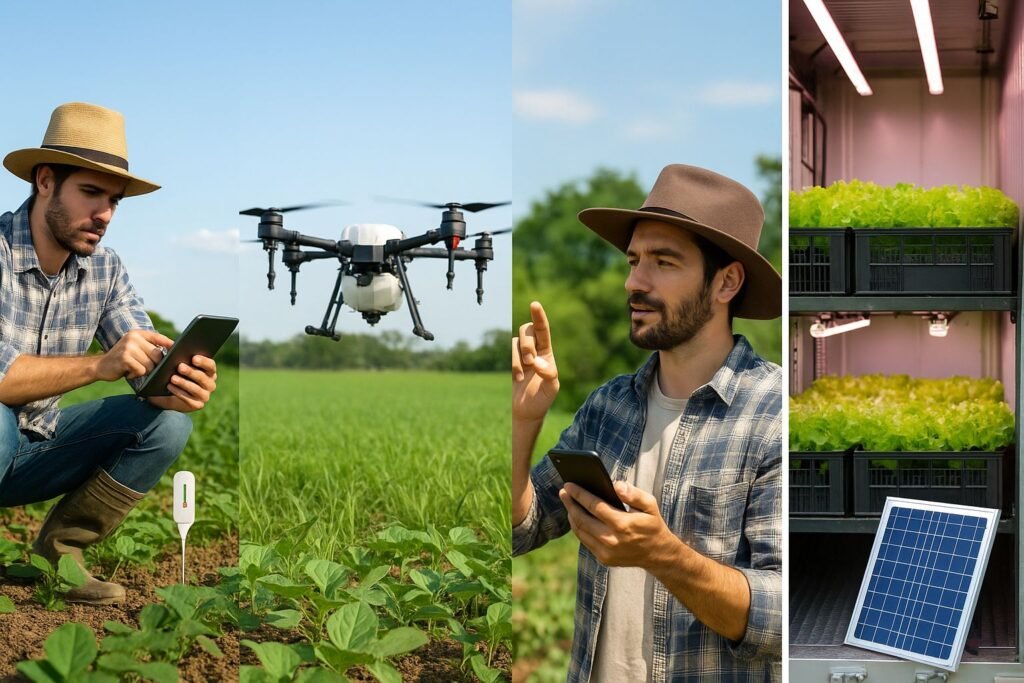
An image showing smart farming technologies in action: a small tractor operating autonomously in a field, a drone flying overhead for crop monitoring, a solar-powered irrigation system in use, and a farmer checking data on a mobile farm management app.

Top 10 Smart Farming Technologies

🌾 Introduction: How Smart Farming Technologies Are Giving Small Farms a Big Advantage In today’s fast-changing agricultural landscape, smallholder farmers in Western countries face enormous pressure to produce more food with fewer resources, all while staying profitable and sustainable. Whether you’re managing 5 acres in Oregon or 20 in rural France, the need to innovate

Top 10 Smart Farming Technologies Read More »

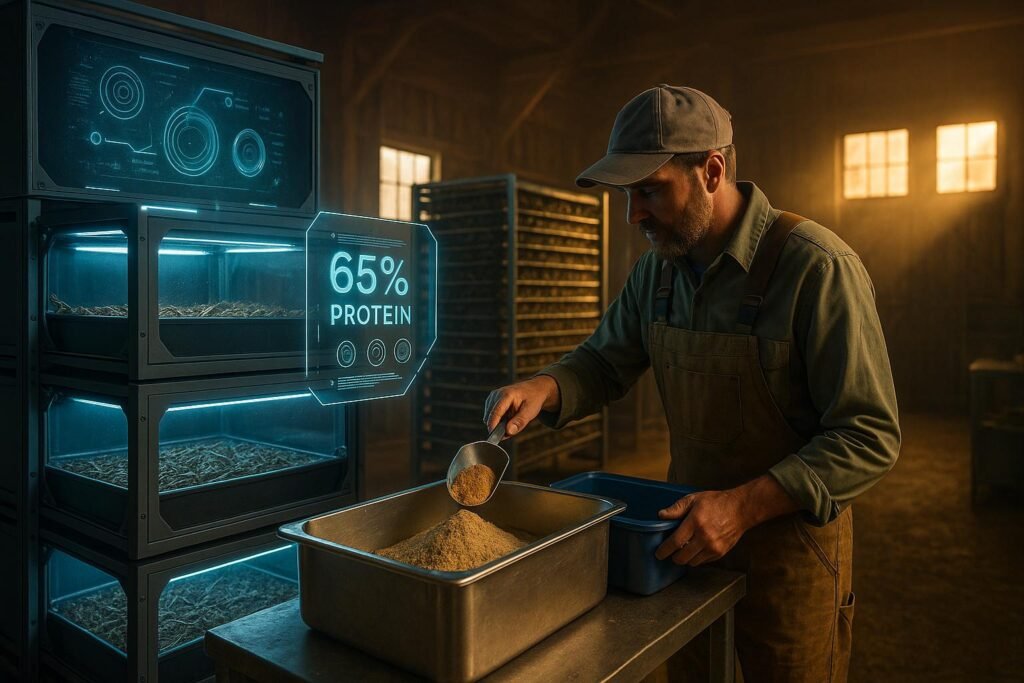
High-tech small-scale insect protein farm inside a repurposed barn, with modular rearing units, LED lighting, and a farmer processing cricket protein powder under natural golden-hour light.

How Small Farms Can Start Insect Protein Businesses in 2025

1. Introduction: The Future of Sustainable Protein In 2025, insect protein is emerging as a sustainable solution to global food and feed challenges. With the global edible insect market projected to hit $9.6 billion by 2030 (Meticulous Research), interest is booming—especially in the US, Canada, and Europe. Around 41% of Europeans and 35% of North

How Small Farms Can Start Insect Protein Businesses in 2025 Read More »

Illustration of a modern diversified farm featuring solar panels, greenhouses, livestock, agritourism facilities, and crop fields.

Farm Diversification: 7 Best Strategies to Increase Income

Introduction Farming in the USA isn’t what it used to be. With rising climate risks, unpredictable markets, and narrowing profit margins, smallholder farmers are under pressure to rethink how they generate income. One proven solution? Farm diversification. Farm diversification involves adding new agricultural or non-agricultural ventures to your operation to reduce risk and boost profitability.

Farm Diversification: 7 Best Strategies to Increase Income Read More »

Families and children enjoying agritourism at a pumpkin patch with hayrides, farm animals, and scenic fall decorations.

Why Smallholder Farmers in the USA Are Turning to Agritourism

Introduction Agritourism—where agriculture and tourism meet—is quickly becoming a lucrative side venture for small-scale farmers across the United States. Whether it’s weekend farm stays, pumpkin patches, hands-on cheese-making workshops, or U-pick berry operations, small farms are attracting curious visitors eager to experience the authentic rural lifestyle. According to the USDA National Agricultural Statistics Service (NASS),

Why Smallholder Farmers in the USA Are Turning to Agritourism Read More »

A vibrant digital illustration of a South Asian family celebrating an eco-friendly Eid outdoors. They are dressed in traditional attire (shalwar kameez and sarees) and surrounded by sustainable elements such as reusable shopping bags, stainless steel utensils, biodegradable decorations, potted plants, and solar-powered lanterns. A "Green Eid" banner hangs in the background, with warm green and gold festive lighting enhancing the joyful atmosphere.

Ecofriendly Eid-ul-Fitr Tips for a Greener Festival

Introduction: Connecting Eid’s Values to Environmental Care Eid-ul-Fitr is a time of joy, gratitude, and charity—a celebration marking the end of Ramadan with feasts, family gatherings, and acts of kindness. However, large-scale celebrations often lead to increased waste, energy consumption, and pollution. Let’s observed Ecofriendly Eid-ul-Fitr. This Eid, let’s align our festivities with sustainability by

Ecofriendly Eid-ul-Fitr Tips for a Greener Festival Read More »