If your tomato plants look more “sad salad” than “summer feast”, the problem is often right under your feet—the soil. Choosing the best soil for tomatoes can dramatically increase your yield, fruit quality, and even your gardening profits. Get it right, and your plants will thrive. However, get it wrong, and you’ll be left wondering where it all went downhill.
Tomatoes are not particularly fussy—but they are picky about soil. Many gardeners in the USA, UK, and beyond assume fertiliser alone does the job. In reality, poor soil structure, incorrect pH, or low organic matter can limit growth before it even starts.
If you’re serious about growing high-yield tomatoes, soil is your foundation. In fact, many successful growers treat soil preparation as an investment rather than a chore.
👉 If you’re just starting out, check this complete guide on
Profitable Tomato Farming: Cost & Profit Guide
to understand the full growing cycle.
What Makes the Best Soil for Tomatoes?
The ideal soil for tomatoes combines three key elements:
1. Proper Drainage
Tomatoes hate “wet feet.” Waterlogged soil leads to root rot and disease.
Best option:
- Loamy soil (a mix of sand, silt, and clay)
2. Rich Organic Matter
Organic matter improves soil structure and nutrient availability.
Top choices:
- Compost
- Well-rotted manure
- Leaf mould
3. Balanced Nutrients
Tomatoes need:
- Nitrogen (for growth)
- Phosphorus (for roots and flowers)
- Potassium (for fruit quality)
Ideal Tomato Soil pH (Critical Factor)
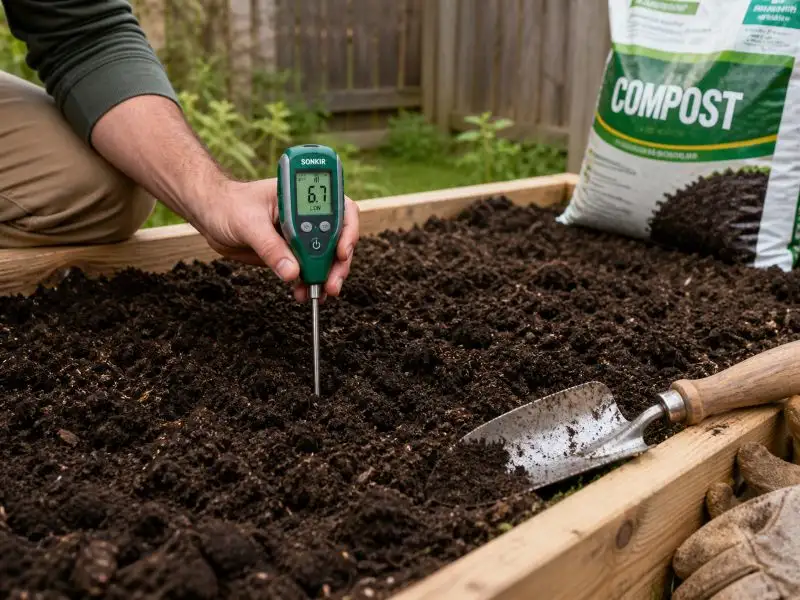
Tomatoes grow best in slightly acidic soil.
Ideal range:
- pH 6.0 to 6.8
If the pH is off, plants struggle to absorb nutrients—even if they’re present.
How to Adjust Soil pH
If soil is too acidic:
- Add garden lime
If soil is too alkaline:
- Add sulphur or compost
Tip: A basic soil pH tester costs around $10–$25 (£8–£20) and is worth every penny.
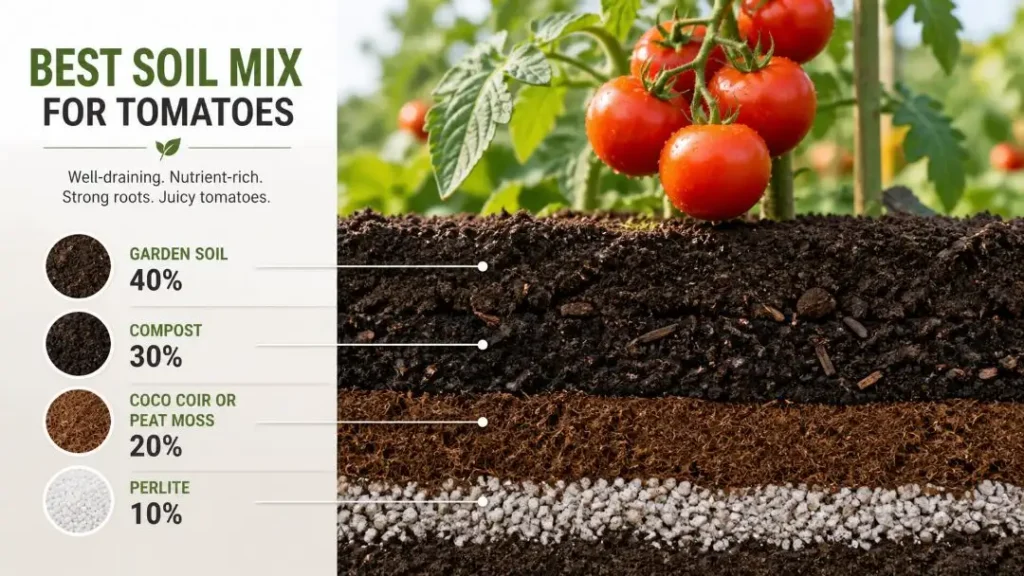
Best Soil Mix for Tomatoes (Perfect Formula)
If you’re building soil from scratch, this mix works brilliantly:
Recommended Soil Mix Ratio:
- 40% garden soil
- 30% compost
- 20% coco coir or peat moss
- 10% perlite or sand
This combination ensures:
- Good drainage
- High fertility
- Strong root development
This is widely considered the best soil mix for tomatoes, especially for high-yield production.
Best Potting Soil for Tomatoes (Container Gardening)
Growing tomatoes in pots? Then standard garden soil won’t cut it.
What to Look For:
- Lightweight texture
- Good drainage
- High organic content
Ideal Potting Mix:
- High-quality commercial potting soil
- Compost
- Perlite
The best potting soil for tomatoes often includes slow-release fertiliser, which saves time and effort.
Cost estimate:
- Premium potting mix: $10–$25 per bag
Best Raised Bed Soil for Tomatoes
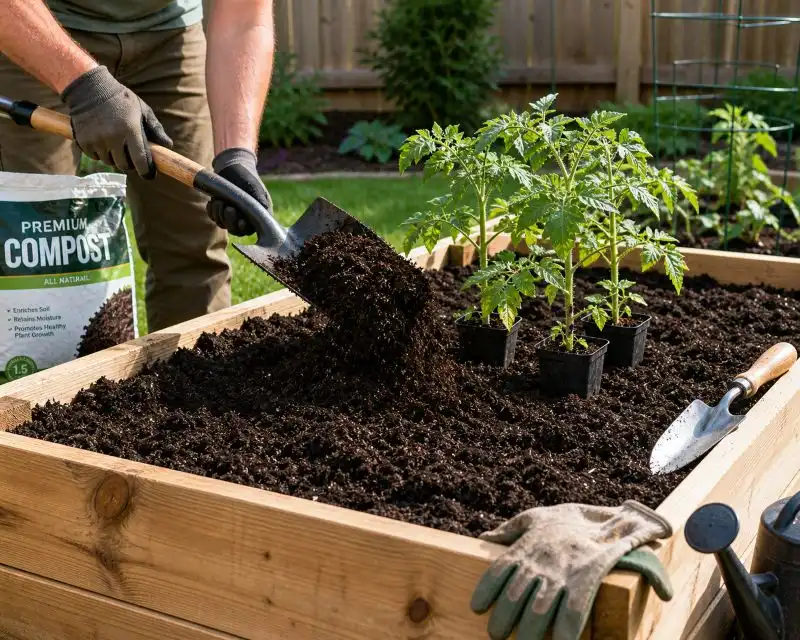
Raised beds are incredibly popular in Western countries—and for good reason.
Why Raised Beds Work:
- Better drainage
- Warmer soil
- Easier management
Ideal Raised Bed Mix:
- 50% topsoil
- 30% compost
- 20% aeration material (perlite/sand)
This is considered the best raised bed soil for tomatoes, especially for urban gardeners.
How to Prepare Soil for Tomatoes (Step-by-Step)
Proper soil preparation can increase yield by 30–50%.
Step 1: Clear the Area
Remove weeds and debris.
Step 2: Test Soil
Check pH and nutrient levels.
Step 3: Add Organic Matter
Mix compost into the top 6–8 inches.
Step 4: Improve Drainage
Add sand or perlite if needed.
Step 5: Pre-Fertilise
Use balanced fertiliser (e.g. 10-10-10).
Soil Preparation Cost & ROI (2025 Data)
Let’s talk numbers—because this is where things get interesting.
Estimated Costs:
| Item | Cost (USD) |
|---|---|
| Compost (bulk) | $30–$80 |
| Soil amendments | $20–$50 |
| pH tester | $10–$25 |
| Raised bed soil | $50–$150 |
Total Setup Cost:
$100–$300 (approx.)
Potential Return:
- 1 healthy plant: 4–10 kg tomatoes
- 10 plants: 40–100 kg
Market value:
- $3–$6 per kg (organic/local)
Potential revenue: $120–$600+
ROI: Very strong, especially for small-scale growers.
Is It Worth It? (Financial & Practical Insight)
Short answer: Yes- absolutely.
Common Mistakes to Avoid
Even experienced gardeners slip up.
Top Mistakes:
- Using heavy clay soil without amendment
- Ignoring soil pH
- Overwatering poorly drained soil
- Skipping compost
Avoid these, and you’re already ahead of most growers.
If you want to maximise your yield after preparing the soil, revisit this guide:
How to Grow Tomatoes for Maximum Profit and Yield
—it connects perfectly with your soil preparation strategy.
FAQ: Best Soil for Tomatoes
1. What is the best soil in pots?
A lightweight, well-draining mix with compost and perlite works best.
2. Can garden soil be used for tomatoes?
Yes, but only after improving it with organic matter and ensuring proper drainage.
3. Which pH level suits tomatoes best?
Between 6.0 and 6.8 for optimal nutrient absorption.
Conclusion: Build the Soil, Grow the Profit
Great tomatoes don’t begin with seeds—they begin with what’s beneath them. Investing time and a bit of money into building the right soil foundation pays off with bigger harvests, richer flavour, and genuine financial returns.
Whether you’re growing in pots, raised beds, or open ground, the principles remain the same:
- Balanced pH
- Rich organic matter
- Good drainage
Get these right, and your tomatoes will do the rest.