If you’ve ever wondered how to grow tomatoes in California, you’re not alone. With its sunny climate and diverse regions, California is practically tomato heaven. Yet, many growers struggle with heat stress, watering issues, and low yields.
The good news? With the right strategy, you can grow juicy, high-yield tomatoes—whether in your backyard or as a small profit venture. And yes, your plants can thrive instead of merely surviving.
California produces over 30% of the world’s processing tomatoes, according to 2024 agricultural data. That’s impressive—but it also means competition is fierce.
For home gardeners and small growers, success depends on understanding microclimates, water management, and variety selection.
If done correctly, tomato growing can be both a rewarding hobby and a profitable side income.
Before diving deeper, you may also want to explore this complete guide:
Profitable Tomato Farming: Cost & Profit Guide , a foundational pillar for mastering tomato production.
Why Growing Tomatoes in California Is Unique
California isn’t just one climate—it’s several rolled into one state.
- Coastal areas = mild, foggy conditions
- Inland valleys = hot and dry
- Desert regions = extreme heat
This diversity means one-size-fits-all advice simply doesn’t work.
Understanding California’s Climate Zones
Coastal Regions
- Cool summers
- Morning fog
- Lower sunlight hours
Inland Valleys
- Hot summers (30–40°C / 86–104°F)
- Dry conditions
- Ideal for high yields
Desert Areas
- Extreme heat
- Low humidity
- Requires careful irrigation
How Climate Affects Tomato Growth & Yield
Tomatoes thrive between 21–29°C (70–85°F).
Too cold → slow growth
Too hot → flower drop and poor fruiting
Therefore, matching your planting schedule with your region is critical.
Best Time to Plant Tomatoes in California
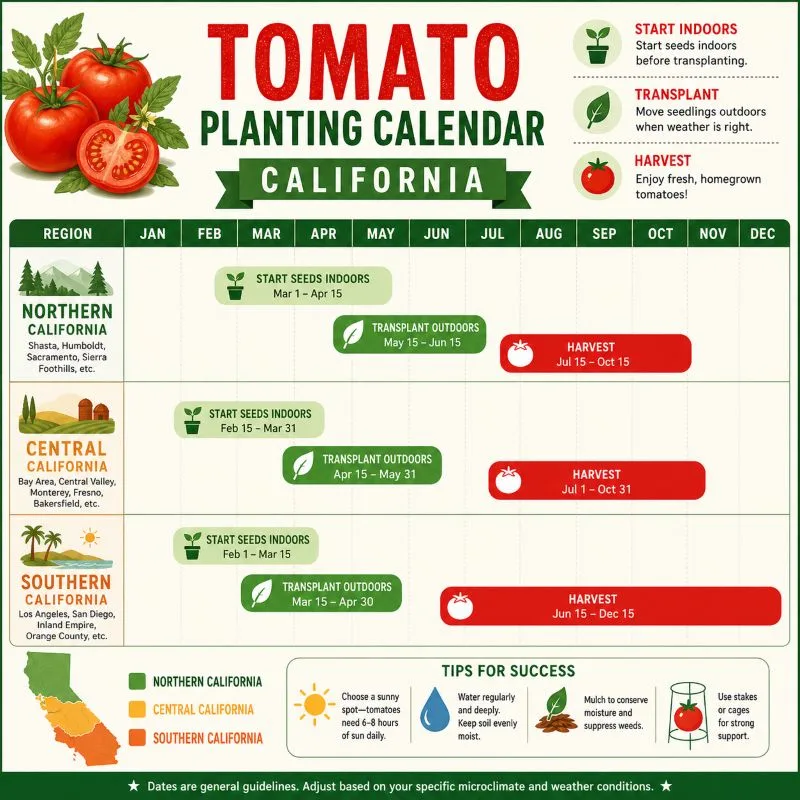
Timing is everything. Plant too early, and frost kills seedlings. Plant too late, and heat reduces yield.
Planting Calendar by Region
Northern California
- Start indoors: February–March
- Transplant: April–May
Central California
- Start indoors: January–February
- Transplant: March–April
Southern California
- Start indoors: December–January
- Transplant: February–March
Soil Temperature & Frost Dates Explained
Tomatoes need soil temperatures above 15°C (60°F).
Cold soil = stunted roots.
Use a soil thermometer—it’s a small investment with big returns.
Indoor vs Outdoor Planting Timing
- Indoor starting gives a 4–6 week head start
- Outdoor sowing works only in warm regions
Best Tomato Varieties for California
Heat-Tolerant Varieties
- Roma
- Celebrity
- Sun Gold
These thrive even in hot inland conditions.
Best Tomatoes for Coastal Areas
- Early Girl
- Stupice
They mature faster in cooler climates.
High-Yield Varieties for Profit Growers
- Big Beef
- Better Boy
These offer higher marketable yield per plant.
Step-by-Step Guide to Growing Tomatoes in California
Choosing the Right Location
Tomatoes need:
- 6–8 hours of sunlight daily
- Good air circulation
Avoid shady corners unless you enjoy disappointment.
Soil Preparation & Fertilisation
Ideal soil:
- pH: 6.0–6.8
- Rich in organic matter
Add:
- Compost
- A balanced fertiliser (10-10-10)
Transplanting Seedlings Properly
- Plant deeper than the root ball
- Bury part of the stem for stronger roots
Spacing & Support
- Space plants: 18–24 inches apart
- Use stakes or cages
Staking = better airflow
Caging = less maintenance
Watering Tomatoes in California (Critical for Success)
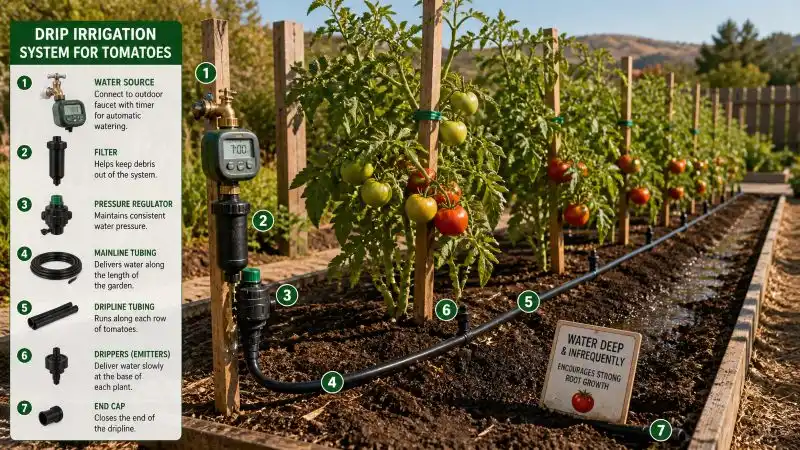
Watering is where most growers fail.
How Often to Water
- Hot climates: every 2–3 days
- Mild climates: once or twice weekly
Consistency matters more than frequency.
Drip Irrigation vs Hand Watering
Drip irrigation (Best option):
- Saves water
- Reduces disease
- Improves yield
Cost: $50–$150 setup (small garden)
Signs of Overwatering & Underwatering
Overwatering:
- Yellow leaves
- Root rot
Underwatering:
- Wilting
- Cracked fruits
Common Problems When Growing Tomatoes in California
Blossom End Rot
Cause: Calcium deficiency
Solution: Consistent watering + soil amendment
Sunscald & Heat Stress
- White patches on fruit
- Use shade cloth if temperatures exceed 35°C
Pests & Diseases
Common threats:
- Aphids
- Whiteflies
- Tomato hornworms
Use neem oil or organic sprays.
Tips to Increase Tomato Yield & Profit
Pruning Techniques
Remove suckers to improve airflow and fruit size.
Companion Planting Ideas
- Basil (improves flavour)
- Marigold (repels pests)
Organic vs Synthetic Fertilisers
Organic:
- Sustainable
- Improves soil health
Synthetic:
- Faster results
- Higher yield potential
Tomatoes need proper nutrition and care to produce high yields. Fertilisation and pruning can make a significant difference in overall production. For more details, check this guide on proven methods to increase tomato yield and profit.
Harvesting & Storage Tips
When Tomatoes Are Ready
- Fully coloured
- Slightly soft to touch
Storage Tips
- Store at room temperature
- Avoid refrigeration (kills flavour)
Is It Worth It? (Financial Evaluation)
Let’s talk money—because passion is great, but profit pays the bills.
Small Garden Setup Cost (2025 Estimate)
| Item | Cost (USD) |
|---|---|
| Seeds/Seedlings | $20–$50 |
| Soil & Compost | $50–$100 |
| Fertiliser | $30–$60 |
| Irrigation Setup | $50–$150 |
| Total | $150–$360 |
Yield & Revenue
- Average yield: 10–20 lbs per plant
- 10 plants = 100–200 lbs
Market price (farmers market):
- $2–$4 per lb
Potential Revenue:
- $200–$800 per season
ROI Insight
- Break-even: 1 season
- Profit potential: moderate to high
If scaled (50–100 plants), income can reach $1,000+ per season.
FAQ Section
1. How long does it take to grow tomatoes in California?
Typically 60–90 days after transplanting.
2. Can tomatoes grow year-round in California?
Yes, in Southern California with proper care.
3. How often should I fertilise tomatoes?
Every 2–3 weeks during the growing season.
4. What is the best soil for tomatoes?
Well-drained, loamy soil with organic matter.
5. Why are my tomatoes not turning red?
Likely due to heat stress or insufficient sunlight.
Learning how to grow tomatoes in California isn’t difficult—it’s about timing, variety selection, and proper care.
Start small. Observe your plants. Adjust as needed.
Before long, you’ll go from struggling gardener to confident grower—with baskets full of tomatoes to prove it.
And who knows? That humble tomato patch might just turn into a tidy side income.